

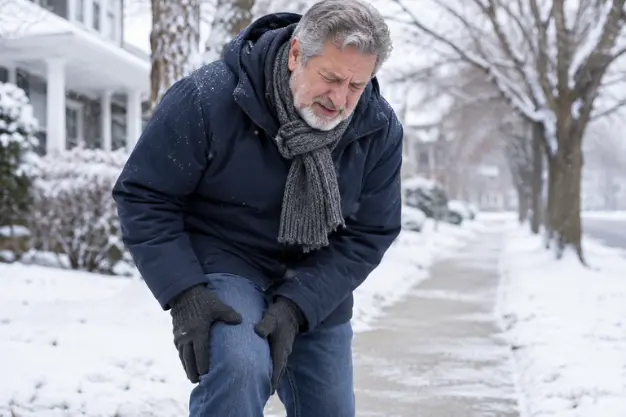
Knees often hurt more in cold weather because falling temperatures and dropping barometric pressure affect the tissues in and around the joint. Cold can thicken joint fluid, tighten muscles and tendons and reduce blood flow to the area. Lower air pressure may also allow tissues around the joint to expand slightly and press on sensitive nerves. People with knee osteoarthritis, old injuries or worn cartilage tend to notice knee pain in cold weather the most.
Why Do Knees Hurt More in Cold Weather?
Researchers have not identified a single cause. Several factors appear to work together. Their effect is strongest in knees that already have arthritis or past damage.
Barometric Pressure Changes
Barometric pressure is the weight of the air around the body. It often drops before cold fronts and winter storms. Lower outside pressure may allow tendons, muscles and scar tissue around the joint to expand slightly. In a knee with worn cartilage, exposed nerve endings in the bone may be more sensitive to these small shifts.
Thicker Joint Fluid and Stiffer Tissues
Synovial fluid cushions and lubricates the knee joint. Lower temperatures may make this fluid thicker, which can leave the joint feeling stiff, particularly in the morning or after sitting. Ligaments and tendons also lose some flexibility in the cold.
Tighter Muscles and Reduced Circulation
The body narrows blood vessels in the limbs during cold exposure to conserve core heat. Reduced blood flow can leave the muscles around the knee tense and slower to warm up. Tight muscles place extra strain on the joint with each step.
Less Activity in Winter
Shorter days, icy sidewalks and cold temperatures often lead to less movement. Joints that move less tend to stiffen. The muscles that support the knee can also weaken over time. Winter weight gain adds further load to the joint.
What Research Shows About Knee Pain in Cold Weather
The evidence is mixed but suggests a real effect for many people. A study of 200 people with knee osteoarthritis, conducted at Tufts University, found that every 10-degree Fahrenheit drop in temperature was associated with an increase in reported pain. Lower barometric pressure was also linked to more pain.
Other research has found weaker connections. A study of more than 11 million Medicare visits found no link between rainfall and joint pain. Taken together, the findings suggest that weather sensitivity varies from person to person. Individual experience remains a meaningful reference for managing symptoms.
Who Notices Pain in the Knee When Cold Weather Arrives
Pain in the knee when cold weather sets in is most common among people with:
- Knee osteoarthritis or rheumatoid arthritis
- Previous knee injuries, such as ligament or meniscus tears
- Past knee surgery
- Tendonitis or other overuse conditions
- Excess body weight, which increases load on the joint
Inflammation around the knee tendons can also flare in cold conditions. Approaches to relieve tendonitis pain in the knees often overlap with cold-weather care.
How to Relieve Knee Pain in Cold Weather
Keep the Knees Warm
Layered clothing, thermal leggings or a knee sleeve help retain heat around the joint. Warming the knees before going outside reduces morning stiffness. A heating pad or warm bath can ease aching in the evening.
Stay Active Indoors
Regular movement keeps the joint lubricated and the supporting muscles strong. Indoor walking, stationary cycling, swimming in a heated pool and gentle yoga place less stress on the knee than high-impact exercise. A short warm-up before activity prepares stiff tissues. Spreading activity across the day, rather than completing it in one long session, also helps prevent the joint from stiffening during long periods of rest.
Build the Supporting Muscles
Strong thigh and hip muscles absorb force that would otherwise pass through the knee. Exercises such as straight leg raises, wall sits and step-ups support stability. A physical therapist can recommend a program suited to the condition of the joint.
Protect Against Falls
Slips on ice can turn a sore knee into a serious injury. Footwear with good traction, handrails on steps and caution on frozen surfaces reduce risk. Salted, well-lit walkways add further protection during early morning and evening hours.
Check Vitamin D Levels
Shorter winter days reduce sunlight exposure, which lowers the amount of vitamin D the skin produces. Low vitamin D levels have been associated with muscle and joint aches in some studies. A simple blood test can show whether levels are low. Any supplementation is best decided with a physician.
Maintain Healthy Habits
Staying hydrated, maintaining a healthy weight and getting adequate sleep all support joint comfort. Over-the-counter pain relievers may help. Their use should be discussed with a physician, particularly for people with kidney, stomach or heart conditions.
Choose the Best Genicular Artery Embolization Treatment for Your Vascular Health
Explore your treatment options and get expert advice from our vascular surgeon.
When Severe Knee Pain in Cold Weather Needs Evaluation
Seasonal stiffness that eases with warmth and movement is common. Severe knee pain in cold weather that persists, interrupts sleep or limits walking may indicate advancing osteoarthritis. Pain that continues despite home care, physical therapy or injections deserves a closer look. Patients weighing their next step often compare GAE vs knee replacement at this stage.
For many patients with arthritis, genicular artery embolization offers a minimally invasive option. The procedure reduces blood flow to the inflamed lining of the knee, which can ease pain without surgery. Reviewing the safety of genicular artery embolization helps patients understand where it fits among other treatments.
SEEK URGENT MEDICAL CARE
Seek prompt medical attention for a knee that becomes hot, red and swollen together with fever. These signs may indicate a joint infection. Call 911 for sudden swelling, warmth and pain in the calf or leg accompanied by shortness of breath or chest pain, which may signal a blood clot.
Knee Pain Treatment in Northern Virginia
Cold months do not have to mean months of knee pain. Prime Vascular Care evaluates arthritis-related knee pain and offers genicular artery embolization at its Sterling and Woodbridge clinics for patients who have not found lasting relief with conservative care. Patients seeking a vascular specialist in Gainesville and nearby communities can schedule a consultation to discuss their symptoms and treatment options.