
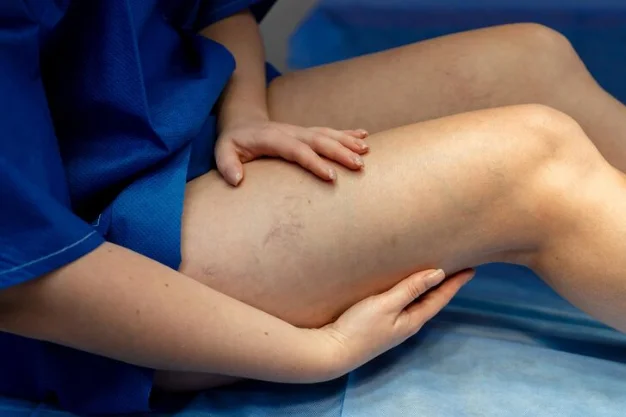
Many new mothers notice bulging, aching veins on their legs during pregnancy and wonder whether those veins will remain once the baby arrives. In many cases, varicose veins that develop during pregnancy shrink or fade within the first three to four months after delivery. Veins that persist beyond that point or continue to cause pain, swelling or heaviness often reflect underlying valve damage that does not resolve on its own. Understanding which changes are temporary and which warrant evaluation helps women make informed decisions during the postpartum period.
What Causes Varicose Veins During Pregnancy?
Pregnancy places several simultaneous demands on the veins of the legs. Blood volume rises by roughly 30 to 50 percent to support the growing baby, increasing the amount of blood the leg veins must return to the heart. The hormone progesterone relaxes the muscular walls of blood vessels, which allows veins to stretch and can prevent their one-way valves from closing properly.
As the uterus enlarges, it presses on the inferior vena cava, the large vein that carries blood from the lower body back to the heart. This pressure slows venous return and raises pressure in the leg veins. Genetics also play a significant role, which explains why some women develop prominent veins in their first pregnancy and others never do. Measures to prevent varicose veins during pregnancy can reduce symptoms but cannot fully offset these physiological changes.
How Long Do Varicose Veins Take to Fade After Pregnancy
Pressure on the inferior vena cava eases immediately after birth. Blood volume and hormone levels return toward pre-pregnancy levels more gradually over the following weeks. As these factors normalize, veins that were simply distended often shrink and become less visible.
HealthPartners notes that this improvement can take up to 12 weeks. Spider veins and small surface veins frequently fade substantially within this period. Larger, rope-like varicose veins are less likely to disappear completely, particularly when the valves inside them were damaged by sustained pressure.
Vulvar and Pelvic Varicose Veins
Varicose veins during pregnancy are not limited to the legs. Vulvar varicosities occur in roughly 8 percent of pregnancies and can cause fullness, aching or itching in the genital area, upper thighs and lower back. Symptoms often worsen after long periods of standing. These veins usually shrink considerably within weeks of delivery. Persistent pelvic or vulvar veins that continue to cause discomfort, particularly alongside leg varicosities, may warrant evaluation for an underlying pelvic venous source.
Why Some Varicose Veins Do Not Disappear After Pregnancy
Certain circumstances increase the chance that pregnancy-related veins will remain after recovery:
- A family history of varicose veins or venous insufficiency
- Multiple pregnancies, especially those closely spaced
- Varicose veins present before pregnancy
- Large or bulging veins rather than fine surface veins
- Significant weight gain during pregnancy
- Occupations that require prolonged standing
Each subsequent pregnancy tends to add strain to veins that have already been stretched. Many women notice that veins become more pronounced with a second or third pregnancy and recover less completely afterward. Women are more prone to venous disease in general. The reasons women get varicose veins more often extend beyond pregnancy alone.
Choose the Best Varicose Vein Treatment for Your Health
Explore your treatment options and get expert advice from our vascular surgeon.
How to Manage Varicose Veins After Pregnancy at Home
Several conservative measures can ease symptoms and support the veins as the body recovers. Graduated compression stockings apply pressure that helps blood move upward and can reduce aching and swelling. Regular walking activates the calf muscle pump, which assists venous return. Elevating the legs above heart level for short periods during the day reduces pooling in the lower legs.
Avoiding long periods of standing or sitting without movement is also helpful during the postpartum months. Returning gradually to a healthy weight lowers the pressure placed on leg veins. Staying hydrated and preventing constipation reduce straining, which can increase pressure in the veins of the pelvis and legs.
Repeated lifting of an infant car seat also adds strain on the legs during the early weeks. Bending at the knees when lifting and taking short breaks to sit with the legs raised can ease symptoms during this demanding period.
When to See a Vein Specialist for Postpartum Varicose Veins
Veins that remain visible after three to six months or continue to cause aching, heaviness, itching or swelling may indicate venous reflux. A duplex ultrasound shows whether the valves are functioning and identifies the source veins feeding the visible varicosities. Skin discoloration near the ankles, a hard and tender vein or a sore that does not heal also warrants assessment without waiting.
Many vein specialists recommend postponing elective procedures until breastfeeding has ended and the body has fully recovered from pregnancy. Women planning additional pregnancies are sometimes advised to defer treatment until their family is complete. New veins can develop with each pregnancy. When treatment is appropriate, minimally invasive options such as endovenous laser ablation, sclerotherapy and microphlebectomy are performed in the office under local anesthesia. A specialist can outline the choices available through varicose vein treatment.
Postpartum Blood Clot Risks and Warning Signs to Watch For
The weeks following delivery carry a higher risk of deep vein thrombosis than pregnancy itself, with risk greatest during the first six weeks. Cesarean delivery, reduced mobility, preeclampsia and a personal or family history of clotting increase this risk further. Varicose veins alone do not cause deep vein clots. Sudden changes in leg symptoms during this period deserve attention. The connection between DVT and pregnancy remains relevant throughout the postpartum recovery window.
SEEK EMERGENCY CARE IMMEDIATELY
Call 911 or go to the nearest emergency department if sudden swelling, pain or warmth develops in one leg together with shortness of breath, chest pain that worsens with breathing, a rapid heartbeat or coughing up blood. These signs may indicate a blood clot that has traveled to the lungs, a serious complication that can occur in the weeks after childbirth.
Final Thoughts
Veins that linger long after delivery are a common concern and a treatable one. Prime Vascular Care evaluates postpartum varicose veins with duplex ultrasound at its Sterling and Woodbridge clinics and explains whether observation, conservative care or treatment best suits each patient’s stage of recovery and family plans. Women from Alexandria, Stafford, Warrenton and those seeking vascular care in Manassas can schedule a consultation to understand their options.