

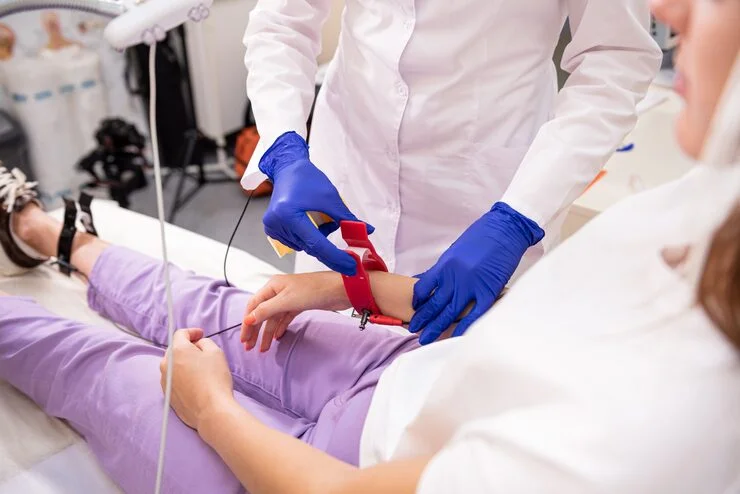
Genicular artery embolization (GAE) is a minimally invasive procedure designed to target abnormal blood vessels contributing to knee osteoarthritis pain. Although it involves catheter access, contrast dye and the introduction of tiny particles into selected arteries, the procedure is performed under controlled conditions by trained specialists.
Current evidence demonstrates a favourable safety profile for appropriately selected patients. Most reported complications are temporary, but GAE is not entirely risk-free. Outcomes depend on patient factors, the condition of the knee and the experience of the treating specialist, highlighting the importance of careful assessment and procedural expertise.
How Genicular Artery Embolization Works
Knee osteoarthritis involves more than just worn cartilage. The joint lining can become inflamed and develop additional small blood vessels that perpetuate the inflammation. During GAE, a specialist guides a thin catheter from the wrist or groin toward the knee. Imaging identifies the vessels supplying the inflamed tissue and tiny particles are released to reduce abnormal blood flow while preserving normal circulation around the joint. Endovascular surgery techniques allow this catheter-based procedure to be performed without a large incision.
The procedure is typically done without general anaesthesia and most patients can return home the same day. Pain relief may not be immediate for all patients, as it can take time for the inflammation to subside and the joint to respond to treatment.
Reported Complications of GAE
Published studies generally report that mild complications are more common than serious ones. Researchers also note that the evidence base is still evolving, as study methods, types of embolic materials and follow-up periods have varied across trials.
| Finding | What It Means for Patients |
| Most events are temporary | Bruising, soreness and skin colour changes usually settle |
| Serious events appear uncommon | Risk remains low in available studies, not zero |
| Results vary | Not every patient experiences the same pain relief |
| Evidence is still growing | Longer comparative studies are still needed |
Weighing the Safety Profile of GAE
The safety of genicular artery embolization treatment should be considered carefully. Early data indicate a reassuring safety profile, but no consultation can guarantee a complication-free procedure or immediate pain relief. While safety and effectiveness are related, they are distinct and patients benefit from understanding both aspects before deciding to proceed.
Risks Patients Should Know Before Treatment
The more common genicular artery embolization risks are usually linked to the catheter access site or temporary changes around the treated knee.
Effects Seen Most Often
- Bruising or a small haematoma near the wrist or groin
- Temporary knee soreness following the procedure
- Short-lived skin discolouration
- Mild swelling or tenderness
- Numbness or tingling that improves over time
Less common risks include infection, contrast allergy, kidney strain, vessel injury, or particles reaching tissue outside the intended area. Skin damage can occur if healthy surface vessels receive insufficient blood, which is why careful imaging and precise catheter placement are essential safeguards throughout the procedure.
Safety Considerations for Knee Embolization
GAE is not suitable for every type of knee pain. Conditions such as a torn ligament, major joint deformity, or infection require alternative treatments, and advanced arthritis may be better managed through orthopaedic care.
Specialists typically review the following before recommending GAE:
- X-rays or other knee imaging
- Pain location and tenderness
- Treatments already attempted
- Kidney function and contrast history
- Blood-thinning medication
- Circulation in the leg
- Infection or wound concerns
A thorough vascular assessment is essential, as poor circulation issues in the lower leg can affect the procedure’s safety. Circulation testing, including symptom evaluation, pulse checks and imaging, helps build a complete clinical picture to guide safe treatment.
What Helps Make the Procedure Safer
Selecting the right candidate is the first step in minimising risk. The treating specialist must confirm that osteoarthritis-related inflammation is the likely source of pain and that the knee does not require immediate surgery. Accurate imaging provides the next layer of safety, with live X-ray guidance used to identify abnormal vessels while avoiding nearby healthy branches. The type and amount of embolic material are carefully controlled throughout the procedure.
Choose the Best Genicular Artery Embolization Treatment Option for Your Health
Explore your treatment options and get expert advice from our vascular surgeon.
A pre-procedure medication review is essential, covering blood thinners, diabetes medications, allergies and kidney function. Structured follow-up after the procedure helps differentiate normal post-procedure soreness from complications that require attention, supporting a smoother and safer recovery.
Symptoms That Need Prompt Attention
Mild bruising or knee discomfort may occur after GAE and is generally expected. Patients may also notice minor swelling or stiffness for a few days. Sudden severe pain, however, requires immediate attention, as does a foot that becomes cold, pale, or numb. Contact your care team promptly if you experience worsening swelling, spreading redness, fever, drainage, increasing skin discolouration or bleeding that does not stop.
Seek emergency services immediately for chest pain, trouble breathing, fainting, or any other severe symptoms. Early communication with your specialist ensures complications are identified and managed quickly, supporting a safer recovery.
Final thoughts
The safety of GAE for any patient depends on thorough screening and precise treatment delivery. A consultation should clearly outline expected benefits, potential complications, and alternative options such as physical therapy, injections, knee replacement, or peripheral artery disease treatment where appropriate.
For patients in Northern Virginia, Prime Vascular Care reviews the knee, discusses the latest evidence and provides guidance on whether the procedure is appropriate without implying it is the right choice for everyone. Anyone experiencing persistent knee pain is encouraged to seek a professional assessment before deciding on the next steps.