

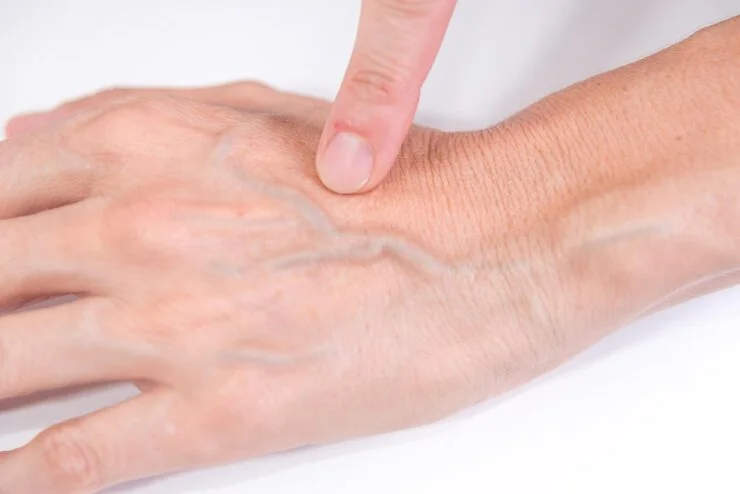
Visible veins on the hands are common and often become more noticeable with age, exercise, changes in body composition, warmer temperatures, or individual anatomy. In many cases, this increased visibility reflects normal differences in skin thickness, blood flow, and the position of superficial veins rather than an underlying disease.
The clinical significance depends on how the change develops and whether other symptoms are present. Veins that suddenly become prominent or are accompanied by pain, swelling, warmth, hardness, or skin discoloration should be evaluated to rule out a possible circulation problem.
Why Veins Visible in Hands Are More Noticeable
The veins on the back of the hands lie close to the skin’s surface, with comparatively little fat or muscle covering them. Their visibility is influenced by vein depth, skin thickness and tone, the amount of tissue beneath the skin, vein size, blood flow, and ambient temperature.
The blue or green appearance of a surface vein does not reflect the color of the blood itself. It results from how light is absorbed and reflected as it passes through skin and tissue. Individual vascular anatomy also varies considerably, which is why two people of a similar age and build can have noticeably different vein prominence.
What Causes Veins to Be More Visible?
Several well-documented, non-urgent factors explain what causes veins to be more visible. Some produce temporary changes, such as heat or physical activity. Others develop gradually as skin and tissue composition change over time.
Aging and Thinner Skin
As skin ages, it becomes thinner and less elastic, while the layer of tissue beneath it gradually diminishes. This reduces the cushioning that normally obscures superficial veins, making veins visible in hands even when they are functioning normally. Cumulative sun exposure can make this effect more noticeable because the hands are regularly exposed during driving, walking, and outdoor activity.
Low Body Fat and Exercise
Reduced tissue between a vein and the skin’s surface allows veins to show through more clearly. This pattern is common among lean individuals, athletes, and people who have recently lost weight. Physical activity also increases blood flow to working muscles, and resistance training can cause veins to temporarily expand and become more prominent. Ongoing muscle development combined with lower body fat can keep veins more defined even between workouts. This is an expected physiological response in trained individuals and does not, by itself, indicate vascular disease.
Heat can make hand veins more visible as surface blood vessels widen to release warmth. Genetics also plays a role, since some people naturally have larger veins or thinner skin.
Choose the Best Varicose Vein Treatment Option for Your Health
Explore your treatment options and get expert advice from our vascular surgeon.
Visible Veins Are Not the Same as Varicose Veins
A vein showing through the skin does not, by itself, indicate a varicose vein. Varicose veins are enlarged, twisted superficial veins associated with weakened vein walls or valves, and they develop most commonly in the legs rather than the hands.
Normal visible veins are typically flat or mildly raised, painless, and similar in both hands, becoming more noticeable after exercise or heat exposure. Bulging or enlarged veins can still result from exercise, low body fat, aging, or natural anatomy, although any new or symptomatic changes should be assessed by a medical professional. Varicose and Spider veins form a different pattern of small red, blue, or purple vessels that are usually cosmetic but can sometimes indicate underlying circulation issues. Regular monitoring helps distinguish harmless veins from those warranting further evaluation.
When Prominent Hand Veins May Signal a Medical Problem
Clinically, the pattern and combination of symptoms carry more diagnostic weight than visibility alone. Superficial thrombophlebitis, an inflammation that sometimes involves a clot in a superficial vein, can present as a tender, cord-like vein with redness, warmth, or localized swelling. Previous cannulation, injections, or IV access can contribute to this presentation.
Less commonly, blood returning from one arm can become obstructed. Venous thoracic outlet syndrome, caused by compression of the subclavian vein, may produce visible veins in one arm together with swelling, aching, heaviness, or discoloration. This combination requires prompt medical assessment rather than cosmetic reassurance.
The following findings warrant evaluation:
- Swelling in one hand or arm
- Pain that follows the course of a vein
- Redness, warmth, or a firm cord under the skin
- Blue or pale discoloration
- Onset after a catheter, surgery, or injury
Chest pain or sudden shortness of breath requires emergency care. Related information on common vein myths can help distinguish ordinary surface changes from findings that need closer review. The DVT treatment also explains why symptoms and imaging must be interpreted together rather than in isolation.
How Visible Hand Veins Are Evaluated
A vascular evaluation typically begins with a detailed symptom history and physical examination, comparing both arms and hands for swelling, skin color, temperature, and pulses. Recent exercise, injury, prior IV access, and relevant medical history are also reviewed.
Not every visible vein requires imaging. When an underlying circulation concern is suspected, duplex ultrasound can assess blood flow and identify a clot or obstruction without radiation exposure. The site’s overview of circulation tests explains how ultrasound supports vascular diagnosis, while a Vascular Health Assessment can help determine whether further workup is appropriate.
Treatment Strategies for Hand Vein Visibility
Veins that are visible because of aging, exercise, low body fat, warmth, or natural anatomy generally do not require medical treatment. When symptoms or a genuine circulation problem are identified, management is directed at the underlying condition rather than appearance alone, ranging from observation to targeted treatment of a vascular issue.
Hand veins can also appear alongside a separate concern elsewhere in the body. Aching, heaviness, swelling, or rope-like veins in the legs may reflect an independent venous problem. Varicose vein treatment is directed at those affected leg veins rather than assuming the hands are the underlying source.
Final Thoughts
For most patients, visible veins on hands relate to aging, exercise, temperature, body composition, or individual anatomy. A change that is sudden, one-sided, painful, swollen, warm, hard, or discolored is different and merits clinical evaluation rather than guesswork.
Prime Vascular Care evaluates vascular symptoms for patients across Northern Virginia. Scheduling an assessment may be appropriate when a hand vein change appears suddenly, affects only one side, persists over time, or is accompanied by pain, swelling, warmth, hardness, or a change in skin color.