
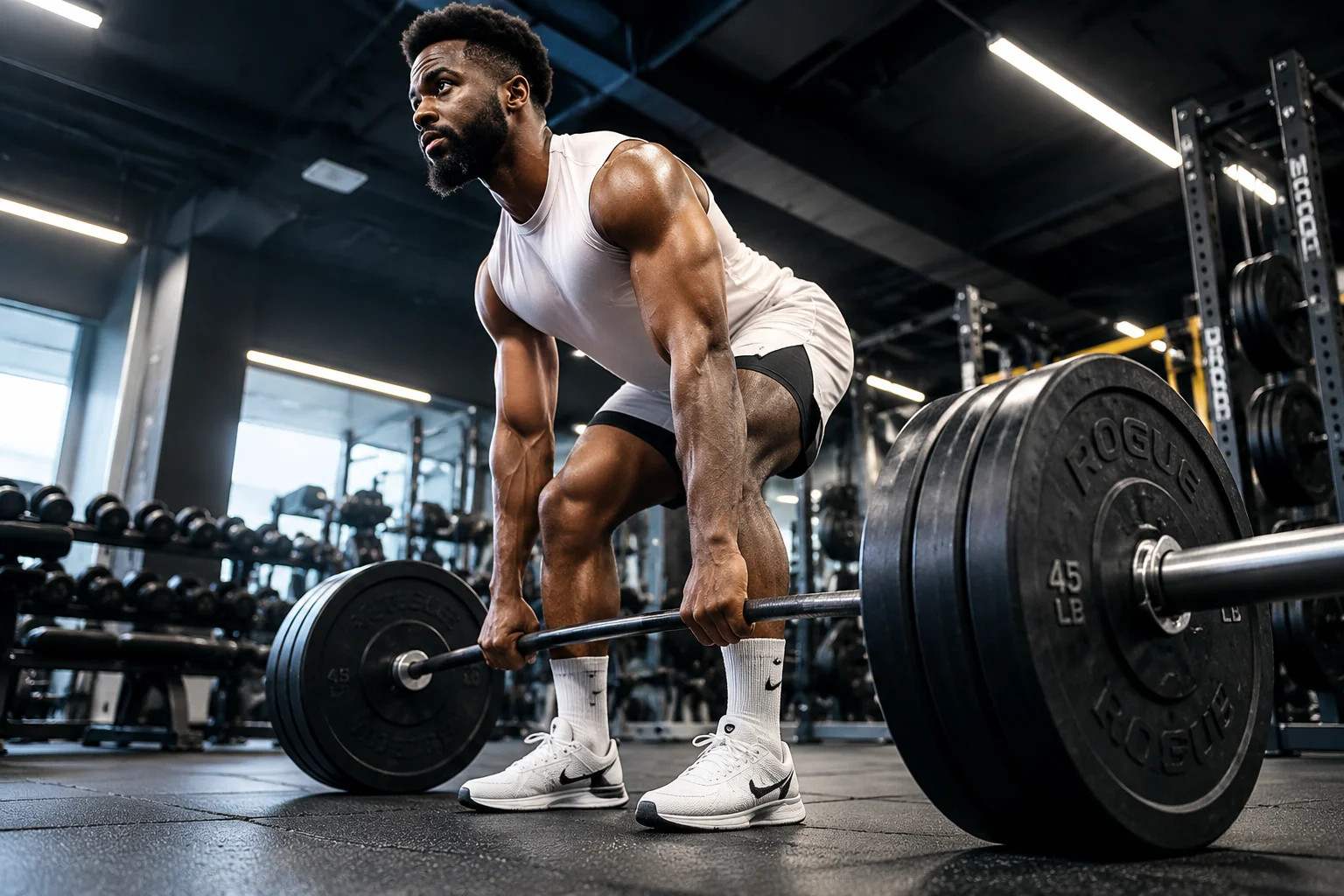
A demanding training session can leave muscles feeling sore and fatigued, but normal post-exercise recovery does not usually cause persistent swelling, tightness or visible colour changes in the arm. When these signs appear together after weightlifting, they may indicate a vascular concern rather than ordinary muscle strain.
Deep vein thrombosis symptoms are often associated with the legs, but a clot can also develop in the veins of the arm. Since arm DVT is less commonly recognised, its warning signs may be mistaken for a lifting injury, muscle soreness or overuse. Understanding these symptoms can help identify when further medical assessment may be needed.
Can Lifting Weights Cause a Blood Clot?
The short answer is yes, although it is uncommon. A blood clot associated with intense upper-body activity is known as effort thrombosis, also called Paget-Schroetter syndrome. It forms in the veins near the collarbone rather than in the arm muscles themselves.
Heavy pressing movements, overhead exercises and repetitive pulling activities are common triggers. The vein that carries blood away from the arm passes through a narrow space between the collarbone and the first rib, where repeated compression can irritate the vein and increase the risk of clot formation. Young, physically active individuals are often affected, which can be surprising because many people associate blood clots mainly with older adults or those with limited activity. The dominant arm is more commonly involved because it typically performs more frequent and demanding lifting movements.
Why Heavy Lifting Can Increase Arm Clot Risk
The space between the collarbone and first rib is naturally limited. Increased muscle development around the chest and shoulders, combined with repetitive heavy lifting, can place additional pressure on the vein. Over time, repeated compression may irritate the vein wall and lead to changes that increase the chance of a clot developing.
|
Movement Type |
Why It Adds Pressure |
|
Overhead press |
Collarbone movement can compress the vein |
|
Heavy bench press |
Shoulder position under load may reduce available space |
|
Deadlifts and heavy rows |
Repeated bracing can increase pressure around the area |
|
High-volume training |
Frequent compression allows less recovery time |
When a vein becomes irritated, a clot can form and partially or completely restrict blood flow from the arm. Poor posture during lifting may also contribute, as rounded shoulders and forward head positioning can further reduce the available space around the vein.
Signs of a Blood Clot in the Arm
Symptoms often develop within hours or days after intense training. Common warning signs include:
- Swelling throughout the arm or hand
- A heavy or unusual tired sensation that worsens with activity
- Bluish or purple skin colouring
- More visible veins around the shoulder or upper chest
- Persistent aching that does not improve with rest
A single symptom may have several possible explanations. However, multiple symptoms occurring together after heavy upper-body training should be assessed rather than assumed to be a normal recovery issue.
Choose the Best Deep Vein Thrombosis Treatment Option for Your Health
Explore your treatment options and get expert advice from our vascular surgeon.
How to Tell a Blood Clot From a Muscle Strain After Lifting
Effort thrombosis can appear similar to a muscle strain during the early stages, making dvt vs muscle strain an important distinction. This is why it is sometimes overlooked by active individuals who expect discomfort after training. A typical muscle strain usually improves gradually with rest, while symptoms linked to a clot may remain unchanged or continue worsening despite stopping exercise.
The difference often becomes clearer by observing symptoms over the following 48 to 72 hours. A muscle injury generally improves with recovery, while persistent swelling, colour changes or visible surface veins require further assessment. Pain that improves with gentle movement may suggest a muscular cause, while increasing swelling and discomfort with activity may indicate a vascular concern.
What Happens If a Blood Clot From Heavy Lifting Is Left Untreated?
A blood clot from heavy lifting can become more serious if it is not identified and treated. The clot may increase in size, restrict circulation or, in some cases, travel to the lungs and create a medical emergency. Even when serious complications do not occur, untreated clots can damage the vein and contribute to long-term symptoms such as swelling, discomfort and reduced arm function. Some people may develop post-thrombotic syndrome, where symptoms continue after the original clot has been treated.
Deep vein thrombosis treatment usually begins with imaging to confirm the diagnosis, followed by anticoagulant medication to prevent further clot growth and, in some cases, procedures to restore normal blood flow. Addressing the underlying compression near the collarbone may also be necessary to lower the risk of recurrence.
Urgent medical assessment is required if arm swelling occurs alongside:
- Sudden shortness of breath
- Chest pain that becomes worse with deep breathing
- A rapid or irregular heartbeat
Conclusion
Recognising the warning signs early can significantly improve outcomes, which is why ongoing arm swelling after weight training should not simply be dismissed as normal soreness. A duplex ultrasound can help evaluate blood flow and identify whether a clot is present.
Prime Vascular Care provides assessment and treatment for vascular conditions, including clot-related concerns. Individuals who notice persistent swelling, colour changes or unusual arm symptoms after intense training should seek professional evaluation rather than continuing to train through the symptoms. Patients located near Hamilton can also access care through a vascular surgeon in Hamilton for timely assessment.