

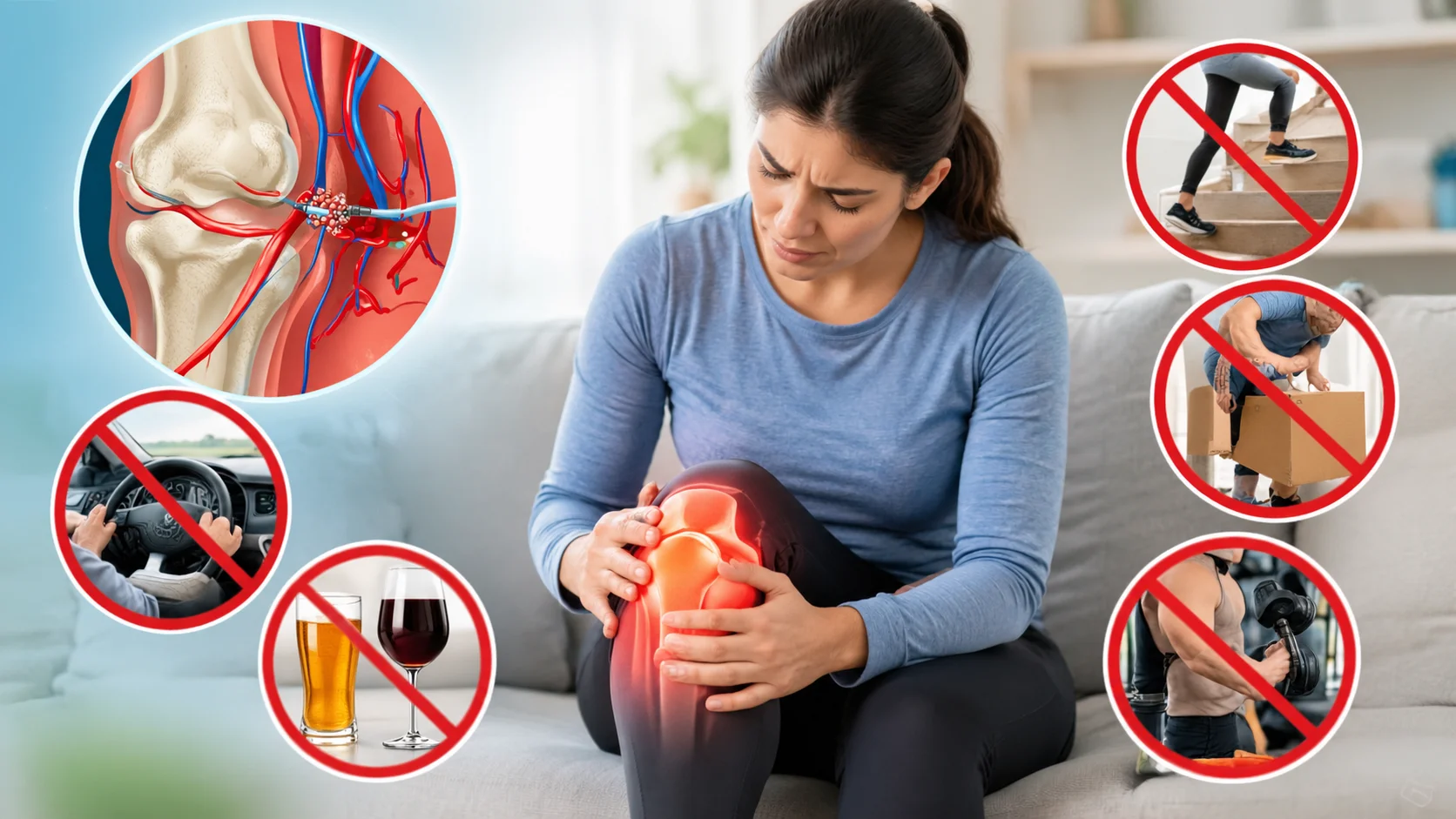
Joint pain that has not improved with injections or physical therapy often leads patients to explore newer treatment options before considering surgery. Whether the target is the knee, shoulder, or another joint affected by chronic inflammation, musculoskeletal embolization offers a minimally invasive approach performed through a small puncture rather than a surgical incision. Most patients return home within a few hours.
Embolization works by reducing abnormal blood vessels that supply inflamed tissue around the joint. Because the treatment gradually changes the inflammatory process, pain relief usually develops over time rather than appearing immediately after the procedure. The short duration of the visit can sometimes cause patients to underestimate the importance of embolization aftercare and the role it plays in recovery. Many patients research the procedure itself but find less information about recovery. The days after treatment are when proper care, activity adjustments and monitoring play an important role in healing.
Why Aftercare Still Matters After a Quick Procedure
Musculoskeletal embolization does not involve large incisions, stitches, or an overnight hospital stay. In many cases, the only visible sign of treatment is a small dressing covering the access point. This simple appearance can sometimes lead patients to overlook important recovery steps during the first few days. Patients who ask “is genicular embolization safe“ often focus on the procedure itself, but proper aftercare remains important for recovery. The treated blood vessels need time to stabilize, while the puncture site requires proper care to heal. Mild warmth, tenderness, or soreness around the treated joint during the first several days is commonly part of the body’s adjustment process after reduced blood flow to inflamed tissue.
Returning to normal activities too quickly does not improve results. Instead, it may increase discomfort, delay healing around the access site, or create avoidable concerns during recovery. Understanding what to avoid after musculoskeletal embolization helps patients protect the treatment area and support steady progress.
What Patients Should Avoid During Early Recovery
The first 24 to 48 hours are especially important because the body begins adjusting immediately after treatment. Any medication prescribed at discharge should be taken exactly as instructed rather than stopped early once discomfort becomes manageable.
| Avoid |
Reason |
|
Driving |
Sedation and pain medication may affect reaction time and alertness |
|
Alcohol |
May interact with medication and affect bleeding risk |
|
Strenuous activity or excessive stairs |
Can increase pressure around the puncture site |
|
Heavy lifting over 15 to 20 pounds |
May place unnecessary strain on the healing access point |
Managing Daily Activities During Recovery
Rest is an important part of recovery after embolization, even when patients feel capable of returning to normal activities quickly. Light movement, such as walking around the home, helps maintain circulation without placing stress on the treated area.
Housework, errands, exercise and physically demanding work should generally be postponed until the body has had additional time to recover. Patients can usually continue with a normal diet, while drinking extra water during the first couple of days may help the body remove the contrast dye used during the procedure.
Puncture Site Care After Embolization
The access point requires careful attention after the procedure because it follows a similar healing process to other minor wounds. Proper wound care treatment reduces the chance of irritation and helps identify potential problems early.
- Keep the dressing clean and dry during the first day
- Avoid baths, hot tubs, swimming pools, or soaking the area for around five days
- Do not apply creams, lotions, or powders directly over the puncture site
- Check daily for a hard lump that increases in size beneath the skin
Warning Signs to Watch For After Embolization
Some discomfort after the procedure is expected. Mild soreness, bruising and a low-grade fever below 101.5 degrees may occur during the first few days as the body responds to treatment. Bruising near the access point can also take two to three weeks to completely disappear.
However, certain symptoms should not be ignored. Contact the medical team if symptoms appear or continue to worsen instead of gradually improving, including:
- Fever above 101.5 degrees
- Increasing redness or warmth around the puncture site
- Sudden swelling or a lump that continues growing
- Numbness, color changes, or unusual coldness in the treated limb
- Bleeding that does not stop after applying firm direct pressure
New or worsening symptoms should always be evaluated, especially if they appear away from the treated joint or affect areas outside the expected recovery pattern.
The Role of a Vascular Specialist During Recovery
Musculoskeletal embolization is performed by physicians who specialize in managing blood vessels and circulation. This expertise is valuable during recovery because it allows specialists to identify the difference between normal post-procedure changes and symptoms that may indicate a circulation-related concern. Their experience with conditions such as peripheral arterial disease treatment also supports careful monitoring of vascular health during recovery.
Patients who previously considered surgery or explored a knee replacement alternative may assume recovery is complete once joint discomfort begins improving. However, recovery after an embolization procedure involves more than pain reduction. The access site, treated vessels and surrounding tissue each require their own healing timeline.
Expected Recovery Timeline After Embolization
Most patients return to desk-based work and light daily routines within several days. More demanding activities are typically resumed gradually over the following one to two weeks, depending on individual recovery progress.
Pain improvement after embolization is usually gradual rather than immediate. Many patients continue noticing improvements over the following weeks and months as inflammation decreases and the treated joint continues to respond.
Conclusion
A follow-up appointment is usually scheduled one to two weeks after treatment to confirm that the puncture site has healed properly and that recovery is progressing as expected. This visit also gives patients an opportunity to discuss concerns before minor issues become larger problems.
Prime Vascular Care supports patients throughout recovery by addressing both the vascular and orthopedic aspects of treatment. These areas do not always recover at the same pace, which makes proper monitoring an important part of the healing process. Ignoring the recommended restrictions rarely speeds up recovery. Following after embolization procedure care instructions, protecting the puncture site during the first week, limiting strenuous activity and attending follow-up appointments allow the treatment to achieve the best possible outcome.