

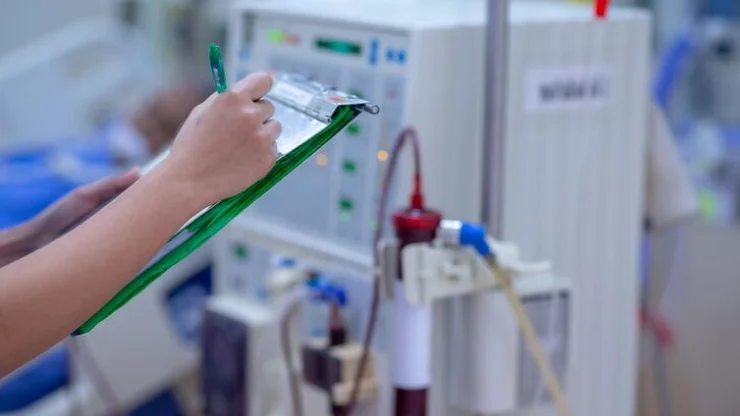
Dialysis introduces a considerable amount of new terminology at once. A patient may hear “fistula” during one appointment, then “graft” or “catheter” at another, making the access decision seem more complicated than it actually is.
Most patients researching what are the 4 types of dialysis are really trying to understand the access options rather than four separate treatments. Hemodialysis relies on three vascular access types: an AV fistula, an AV graft and a central venous catheter. Peritoneal dialysis, by contrast, uses a catheter placed in the abdomen. An earlier comparison of AV fistulas and grafts examined two of the most common options.
What Are the Different Types of Dialysis Access?
Three of the four options provide bloodstream access for hemodialysis, while the fourth provides access to the abdominal cavity for peritoneal dialysis.
|
Access type |
Used for | When it may fit | Main tradeoff |
|
AV fistula |
Hemodialysis | Long-term use with suitable vessels |
Needs time to mature |
|
AV graft |
Hemodialysis | When a fistula is not a good fit |
More clotting and infection |
|
Central venous catheter |
Hemodialysis | Urgent or temporary access |
Greater infection concern |
|
PD catheter |
Peritoneal dialysis | Home-based treatment | Requires careful catheter care |
The appropriate choice depends on factors such as timing, vessel quality, previous procedures and infection risk. When considering AV fistula vs graft dialysis, these factors should be assessed together rather than viewed in isolation to determine the most suitable access.
What Is an AV Fistula and When Is It Used?
An AV fistula is created when a surgeon connects an artery directly to a vein, usually in the arm. The increased blood flow strengthens and enlarges the vein, allowing it to withstand repeated needle placement during dialysis.
Because a fistula uses the patient’s own blood vessels, it generally offers longer-term durability with lower infection and clotting risks than a graft or catheter. The main limitation is time: a new fistula can require several weeks to mature and some patients may not have vessels suitable for one. A vessel assessment before access creation helps determine whether this option is practical.
When Is an AV Graft a Better Option?
An AV graft also connects an artery to a vein, but it does so using a synthetic tube placed beneath the skin. This option may suit patients whose natural vessels are too small, fragile, or otherwise unsuitable for fistula creation.
Grafts can generally be used sooner than fistulas, which can be an important advantage when dialysis needs to begin within a shorter timeframe. However, they require closer monitoring because narrowing, clotting and infection can occur more frequently. When vessel condition and treatment timing point in this direction, a graft may offer a more practical solution.
When Is a Dialysis Catheter Used?
A central venous catheter is a soft tube inserted into a large vein, most commonly in the neck or chest. Because it can be used immediately, it can provide important access when dialysis needs to begin before a fistula or graft has matured.
However, catheters carry greater risks of infection and clotting and prolonged use can sometimes affect the major veins. In many cases, a catheter serves as a temporary bridge while another access matures. Longer-term use may be appropriate in selected circumstances, but this decision should be made by the kidney and vascular care teams together.
How Does a Peritoneal Dialysis Catheter Work?
Unlike the other three options, a peritoneal dialysis catheter does not enter the bloodstream. Instead, it enters the abdomen, where dialysis solution circulates and the abdominal lining helps remove waste products and excess fluid.
This distinction is important because a PD catheter supports an entirely different dialysis method. Peritoneal dialysis can often be performed at home, but it requires consistent catheter care because an infection at the exit site or inside the abdomen can become serious quickly.
Choose the Best Dialysis Access & Maintenance Option for Your Health
Explore your treatment options and get expert advice from our vascular surgeon.
How Is the Right Dialysis Access Chosen?
No single access option is appropriate for every patient. A vascular surgeon and nephrology team typically consider several factors, including:
- How soon dialysis needs to begin
- Whether hemodialysis or peritoneal dialysis is planned
- The size and condition of the blood vessels
- Any previous catheters, fistulas, or grafts
- Infection history and other medical conditions
- How long the access may be required
Current kidney care standards support an individualized approach rather than relying on one default option. Once a fistula or graft has been established, ongoing monitoring and Dialysis Access Maintenance become important parts of long-term dialysis care, helping identify potential complications and preserve access function.
What Are the Warning Signs of Dialysis Access Problems?
Even a carefully selected access can develop complications. A fistula or graft may narrow, a graft can become blocked by a clot and a catheter may become infected or fail to provide adequate blood flow. Recognising changes early can help preserve the access. Patients should contact their dialysis or vascular team promptly if they notice:
- A thrill that becomes weaker or disappears
- New swelling, redness, warmth, or drainage around the access
- Repeated machine alarms during dialysis
- Longer bleeding after needle removal
- New hand pain, numbness, or unusual coolness
A sudden loss of the normal thrill requires prompt attention because it can indicate that blood flow through the access has become blocked.
How Does a Vascular Specialist Help With Dialysis Access?
Dialysis access must provide reliable blood flow while preserving future access options whenever possible. Before an AV fistula or graft is created, a vascular specialist can evaluate the blood vessels and help identify the most appropriate access site. NIDDK recommends coordinating access planning between nephrology and vascular surgery before hemodialysis begins whenever possible.
For patients throughout Northern Virginia, consultation with a Fairfax vascular surgeon or Manassas vascular surgeon can form part of this coordinated approach, helping ensure the access plan accounts for both immediate dialysis needs and longer-term vascular health.
Bottom Line
Prime Vascular Care evaluates hemodialysis access throughout Northern Virginia, with attention to AV fistulas, AV grafts and ongoing access function. The practice also manages complications such as narrowing or clotting when necessary.
Choosing among the different types of dialysis access begins with the planned dialysis method and then considers timing, vessel quality, previous access history and long-term treatment needs. A well-planned approach can reduce last-minute decisions while helping preserve reliable access for future dialysis treatment.