
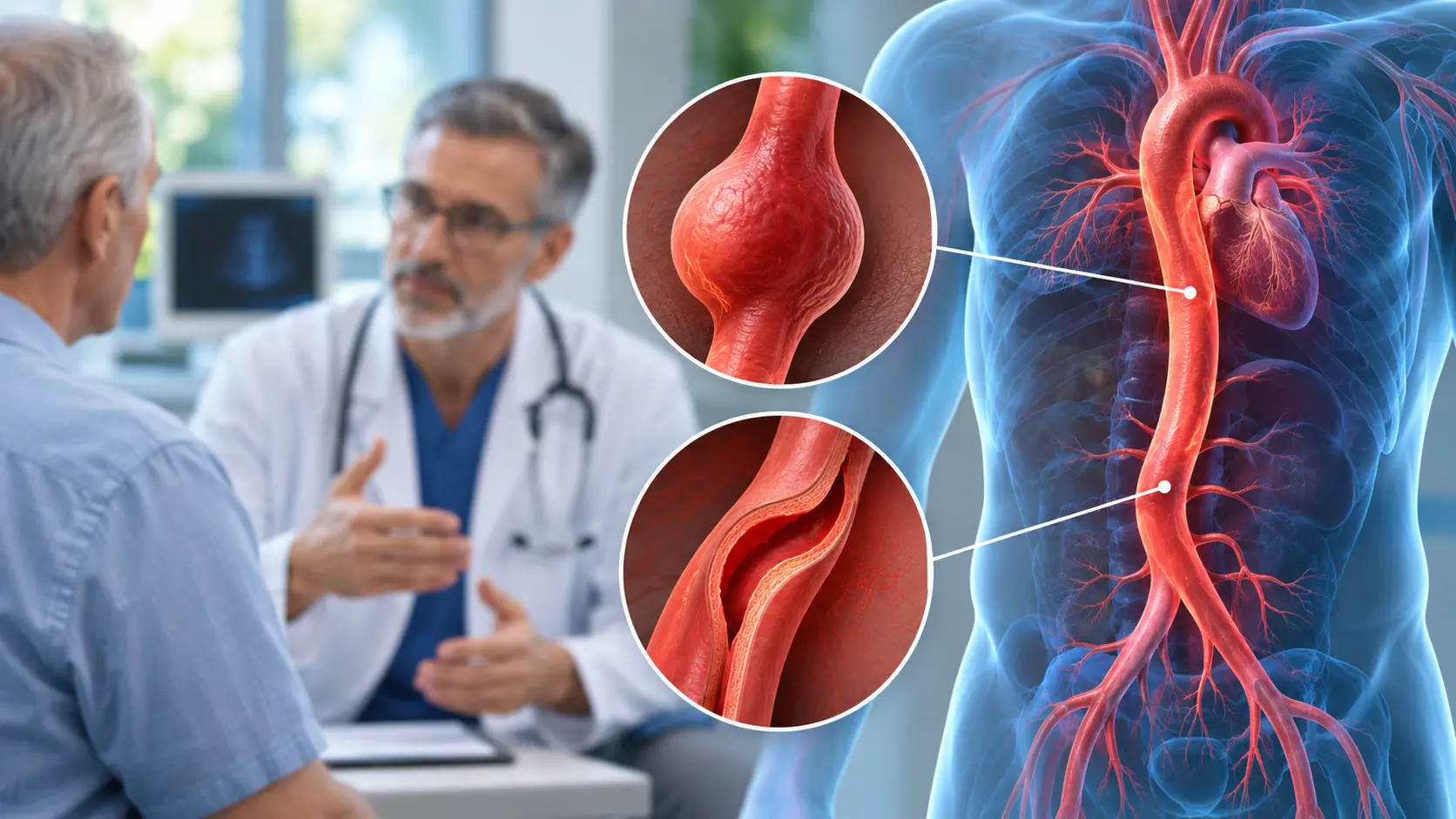
Sudden, severe pain in the chest, back or abdomen raises an urgent question when the aorta is involved: is the problem an aneurysm or a dissection? The two terms are often used interchangeably. They describe different conditions, however, with different causes, warning signs and levels of urgency. An aortic aneurysm is a weakened section of the aorta that gradually bulges outward.
An aortic dissection is a tear in the inner wall of the aorta that allows blood to force its way between the layers of the vessel. Understanding the distinction helps patients recognize which symptoms demand immediate emergency care and which call for planned monitoring.
The Aorta and Why It Matters
The aorta is the largest artery in the body. It carries oxygen-rich blood from the heart upward through the chest, then down through the abdomen before dividing into the arteries that supply the legs. The section within the chest is called the thoracic aorta. The section below the diaphragm is the abdominal aorta.
The aortic wall has three layers: a thin inner lining called the intima, a muscular middle layer called the media and a tough outer layer called the adventitia. Both aneurysms and dissections involve damage to this layered wall. The way the wall fails is what separates one condition from the other.
What Is an Aortic Aneurysm?
An aortic aneurysm forms when a section of the aortic wall weakens and widens. In the abdomen, a diameter of 3.0 cm or larger is generally considered an aneurysm. Most abdominal aortic aneurysms (AAAs) develop slowly over years and produce no symptoms while they grow.
Atherosclerosis, smoking, high blood pressure, advancing age and a family history of aneurysm are the most common contributors. Men over 65 who have smoked carry the highest risk. Because growth is usually gradual, specialists track how fast abdominal aortic aneurysms grow with periodic imaging to decide when repair becomes appropriate.
The main danger of an aneurysm is rupture. Risk increases as the aneurysm enlarges. A ruptured aneurysm causes massive internal bleeding and is frequently fatal without immediate surgery.
What Is an Aortic Dissection?
An aortic dissection begins with a tear in the intima. Blood surges through the tear and splits the inner and middle layers apart, creating a second channel within the aortic wall known as a false lumen. As the false lumen extends, it can block branch arteries that supply the heart, brain, kidneys, intestines, spinal cord or limbs.
Specialists classify dissections by location using the Stanford system. A Type A dissection involves the ascending aorta near the heart. A Type B dissection involves the descending aorta beyond the arteries that supply the head and arms. The distinction guides treatment and determines how quickly surgery is needed.
Chronic high blood pressure is the most common risk factor. Other contributors include inherited connective tissue disorders such as Marfan syndrome, a bicuspid aortic valve, an existing thoracic aneurysm, stimulant drug use and severe chest trauma.
Key Differences Between the Two Conditions
How Each Condition Develops
An aneurysm develops gradually as the wall weakens and stretches. A dissection is typically an abrupt event that occurs within seconds. An aneurysm may be present for many years before it causes any problem. A dissection is almost always a sudden emergency.
Symptoms and Warning Signs
Most aneurysms cause no symptoms until they become very large or begin to leak. Some patients notice a pulsating sensation near the navel or persistent deep pain in the abdomen or lower back. A rupture produces sudden, severe abdominal or back pain accompanied by dizziness, a rapid pulse or fainting.
A dissection typically causes immediate, severe pain often described as tearing or ripping. Pain usually begins in the chest or upper back and may travel toward the abdomen as the tear extends. Additional symptoms depend on which arteries are affected. Stroke-like weakness, loss of pulse in an arm or leg, abdominal pain or shortness of breath may all occur.
Location Within the Aorta
Aneurysms occur most often in the abdominal aorta below the kidneys. Dissections most commonly begin in the thoracic aorta within the chest. Either condition can affect any part of the aorta. Some patients develop both.
Urgency and Treatment
Small aneurysms are usually managed with monitoring and risk factor control. Elective repair is generally recommended once an abdominal aneurysm reaches about 5.5 cm in men or a smaller size in women. Large aneurysms or rapid growth also prompt repair. The approaches available through abdominal aortic aneurysm treatment include endovascular stent grafting and open surgical repair.
A Type A dissection requires emergency open surgery to replace the damaged section of the aorta. A Type B dissection is often managed first in intensive care with medications that lower heart rate and blood pressure. Some Type B cases require thoracic endovascular aortic repair (TEVAR) to seal the tear. Data from the International Registry of Acute Aortic Dissection showed a 48-hour mortality of 4.4 percent with surgical repair for Type A dissection. The rate approached 24 percent with medical management alone.
How the Two Conditions Are Connected
An existing aneurysm can make the aortic wall more vulnerable to tearing. This is particularly true for aneurysms in the thoracic aorta. A dissection can also weaken the outer wall over time and cause the affected section to enlarge into an aneurysm. For this reason, patients who survive a dissection require lifelong imaging to monitor the aorta for gradual expansion.
Diagnosis and Monitoring
Abdominal aneurysms are frequently detected on ultrasound during routine abdominal aortic aneurysm screening or found incidentally during imaging for another reason. Ultrasound measures the diameter of the aorta accurately and involves no radiation.
A suspected dissection is diagnosed in the emergency department, most often with CT angiography. Transesophageal echocardiography or MRI may also be used. Speed of diagnosis directly affects survival.
Protecting Long-Term Aortic Health
Several measures lower the risk of both conditions. Controlling blood pressure is among the most important. Elevated pressure places constant stress on the aortic wall. Stopping smoking slows aneurysm growth and reduces the risk of rupture. Managing cholesterol, staying physically active within medical guidance and attending scheduled imaging appointments also support long-term outcomes. Patients facing aneurysm repair can review the trade-offs of open versus endovascular AAA surgery with their surgeon.
SEEK EMERGENCY CARE IMMEDIATELY
Call 911 for sudden, severe tearing or ripping pain in the chest, back or abdomen. Emergency care is also needed for chest or back pain accompanied by fainting, shortness of breath, weakness on one side of the body or loss of a pulse in an arm or leg. These symptoms may indicate an aortic dissection or a ruptured aneurysm, both of which require immediate treatment.
Final Thoughts
An aneurysm detected early can usually be monitored safely and repaired on a planned schedule. Prime Vascular Care provides same-day aortic ultrasound at its Sterling and Woodbridge clinics along with structured monitoring for patients with an enlarged aorta. Patients seeking an experienced Reston vascular surgeon can schedule a consultation to assess their aortic health and review the next steps.