

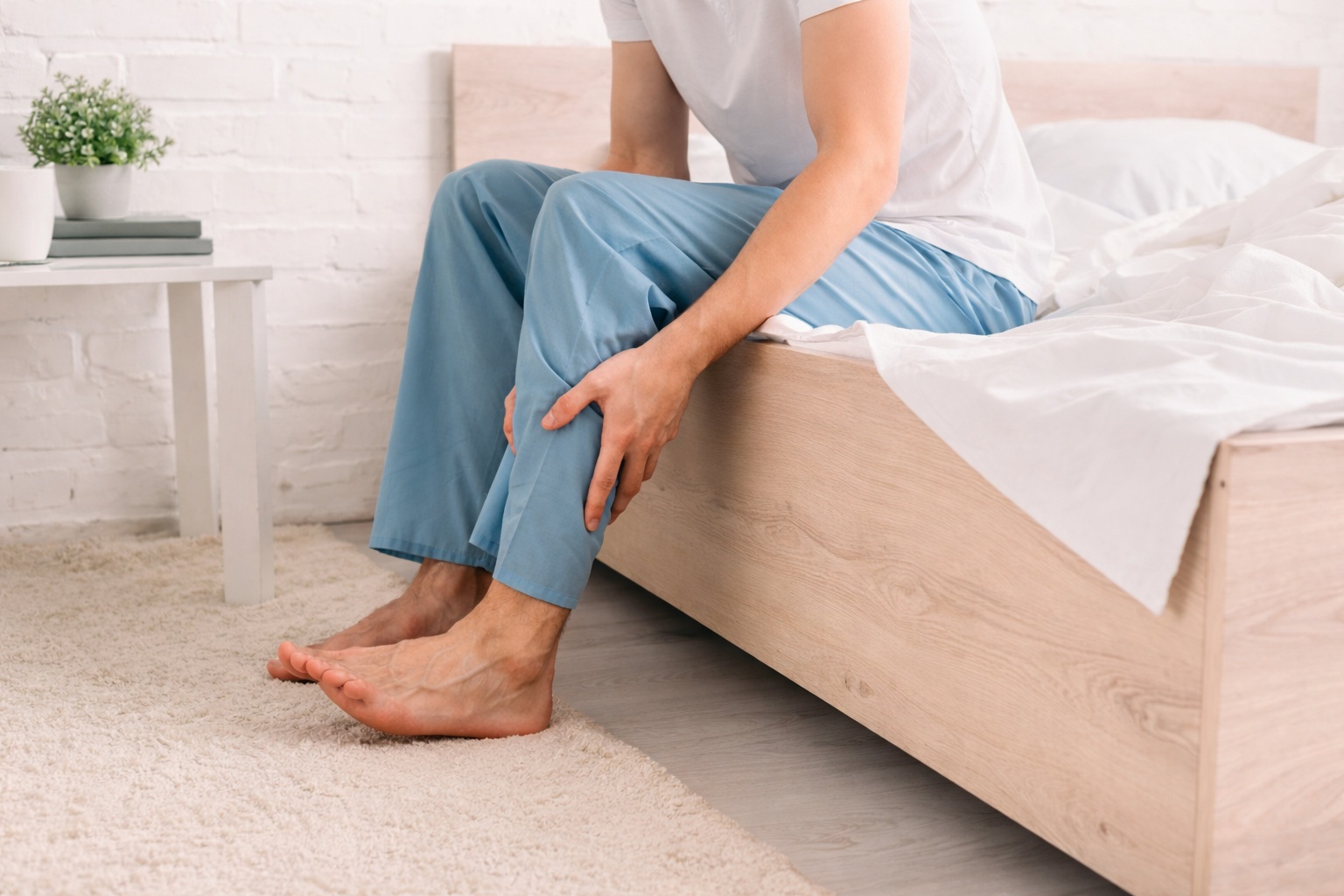
Your eyes snap open at 2 a.m. Calf pain shoots through your leg. The muscle locks tight. You can’t move your foot. Several agonizing minutes pass before it finally releases.
About 60% of adults deal with this. Thirty percent get hit at least five times a month. Most cramps come from tired muscles or not drinking enough water. But when the same leg keeps cramping, especially with walking, that’s your circulation trying to tell you something.
Leg Cramps vs. Restless Legs Syndrome
These two get confused all the time. Here’s the difference:
| Leg Cramps | Restless Legs Syndrome |
| Sharp pain that makes you want to scream | Uncomfortable feeling, not painful |
| Rock-hard muscle you can actually feel | Just an urge to move |
| Can’t move the leg during the cramp | Moving helps |
| Over in seconds to 10 minutes | Goes on and on |
| Muscle aches afterward | No hard knot |
How Vascular Health Affects Leg Cramping
Think of your blood vessels as highways. When they work right, oxygen-rich blood reaches your muscles easily. When they don’t, muscles start complaining.
Blocked arteries starve muscles. Plaque narrows arteries. Blood can’t get through. During rest, your muscles don’t need much oxygen, so you’re fine. Start walking or climbing stairs? Your muscles need more fuel. If blocked arteries can’t deliver, muscles cramp. This pattern of leg pain signals peripheral arterial disease, which may need PAD treatment to restore blood flow
Damaged veins create traffic jams. Veins carry blood back to your heart. When valves fail, blood flows backward and pools in your legs. Fresh blood can’t get in. Result: cramping, heaviness, that tired-leg feeling that gets worse as the day goes on.
Poor circulation messes with muscle recovery. Even when you’re sleeping, muscles need steady blood flow to clear out waste. When circulation fails, waste builds up. Muscles cramp from the accumulation.
What Causes Nighttime Leg Cramps?
Overworked Muscles
Pushed hard at the gym yesterday? Stood on your feet all day? Your muscles remember. They might seem fine during the day, then BAM—midnight cramp. Athletes see this all the time after intense training.
Not Enough Water
Muscles are picky. They need the right balance of sodium, potassium and magnesium to work smoothly. Get dehydrated? That balance goes haywire. Muscles start cramping. Alcohol and caffeine make it worse because they dry you out even more.
How You Sleep
Most people sleep with feet pointed down. This shortens your calf muscles. Shortened muscles cramp easier. Your brain keeps sending signals all night. In that shortened position, signals misfire more easily. Cramp time.
Medications
Some prescriptions trigger cramps: water pills, cholesterol meds, blood pressure drugs, asthma inhalers. If cramping started after a new prescription, talk to your doctor. Don’t just quit taking it.
Getting Older
Tendons get shorter as we age. About 40% of people over 50 get frequent night cramps. Blood vessels stiffen too. Less flexible tendons plus stiffer blood vessels equals more cramping.
Stop a Cramp Right Now
Stretch it. Straighten your leg. Pull your toes toward you. Hold for 10-15 seconds. Repeat until it lets go.
Get up. Stand. Put weight on your feet. Walk on your heels. This activates the opposite muscles and forces the cramped one to release.
Massage hard. Really dig into that rock-hard muscle with both hands.
Heat it. Heating pad or warm towel. Heat beats ice every time for active cramps.
Pickle juice works. Sounds weird. The acetic acid somehow stops the cramping signals. Some people swear by it.
Prevention That Actually Works
Stretch Every Night
It takes six weeks to kick in, but it works. Do this before bed:
Calf stretch: Face a wall. Step one foot way back. Keep that heel down. Lean in until you feel the pull. Hold 30 seconds. Switch legs. Do this three times each side.
Drink More Water
Not just before bed. All day. Rough guide: take your weight in pounds, divide by two. That’s how many ounces you need. Skip alcohol and caffeine after 6 p.m.
Fix Your Sleep Setup
Prop your feet with a pillow. Keep them neutral, not pointing down. Loosen the sheets at the bottom of your bed. Your feet need room to move.
Soak Before Bed
Warm bath for 15-20 minutes. Relax everything. Some people add Epsom salt. Might help, might not. Won’t hurt.
Conditions That Cause Cramping
Vascular problems: Blocked leg arteries, blood pooling in veins
Metabolic stuff: Diabetes (damages nerves, blocks arteries), kidney disease (electrolytes go haywire), thyroid problems
Structural issues: Pinched nerves in your spine, flat feet changing how your legs work
What About Supplements?
Magnesium’s a mixed bag. Some studies say it helps a little. Others say it doesn’t do anything.
Vitamin K2 looks more promising. A recent 2024 study found it reduced cramping in older adults. Still early, but worth watching.
Vitamin B complex gets recommended a lot. Evidence? Not much there.
Bottom line: Talk to your doctor first. Supplements mess with medications.
When It’s More Than Just Cramps
See a vascular specialist if:
- Walking hurts so bad you have to stop
- One leg cramps way more than the other
- That leg feels cooler than the other one
- Skin looks different (color, texture, shine)
- Cuts or sores won’t heal
- Numbness or weakness getting worse
If you’ve got multiple leg symptoms showing up together, get checked. Vascular testing catches blockages before they cause real damage.
Also see a doctor if:
- Cramping multiple nights a week for over a month
- You’re exhausted from not sleeping
- Stretching and water don’t help
Blood tests can spot kidney problems, diabetes, thyroid issues, or mineral imbalances. All fixable if caught early.
The Real Difference
Most cramps respond to stretching and drinking more water. You’ll see improvement in a few weeks.
Circulation cramps are different. They happen when you walk. Same leg every time. Other symptoms tag along—skin changes, temperature differences, walking pain.
If your pattern matches the circulation type, don’t waste time stretching more. You need actual circulation screening. Catching blockages early means simpler treatment and better outcomes.
Got frequent leg cramps with walking pain or skin changes? These patterns point to circulation issues, not typical muscle cramps. At Prime Vascular Care, we specialize in vascular health and can figure out whether your cramping stems from arterial blockages or something else. Schedule a consultation to get real answers.