

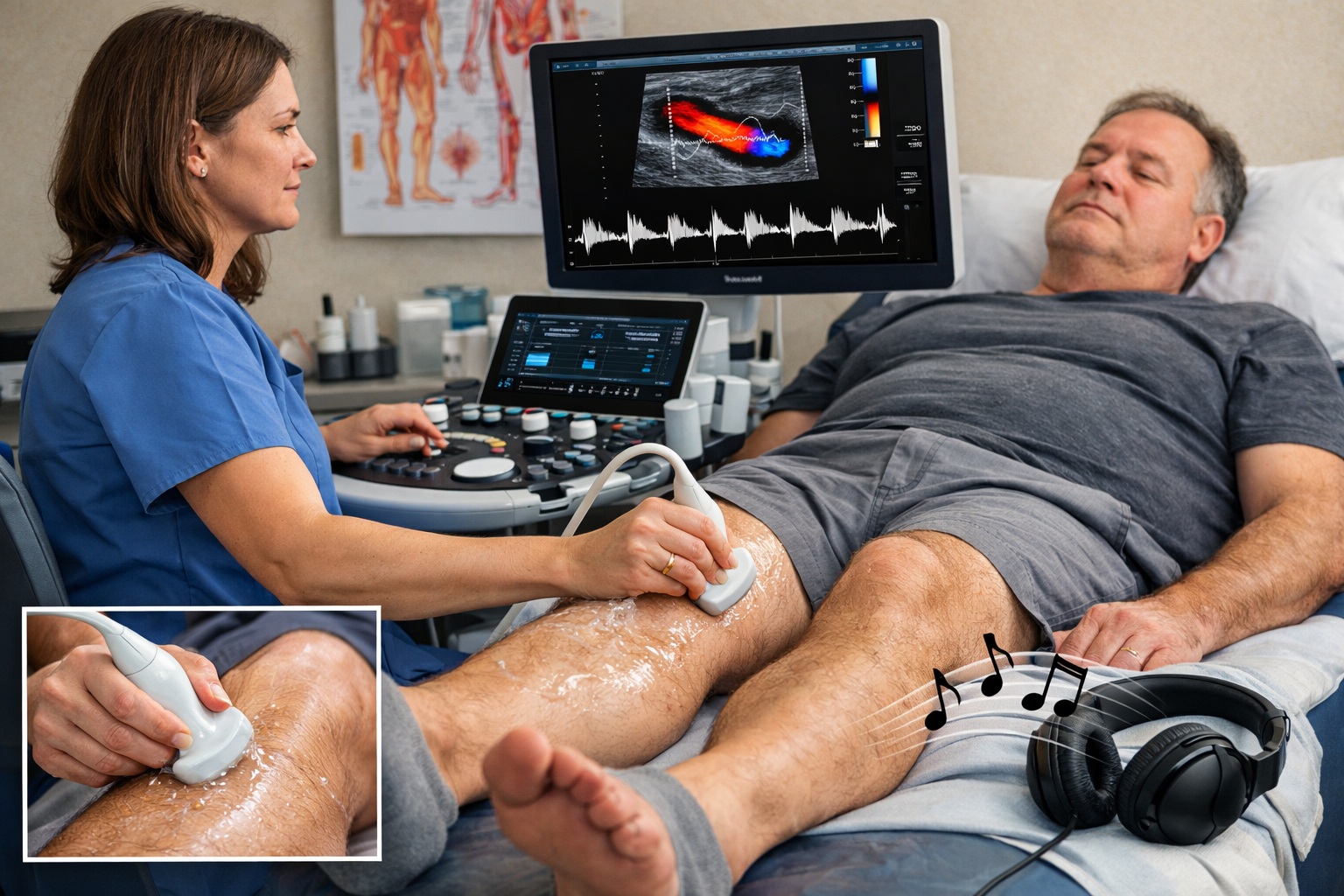
Your left calf has been acting weird for three weeks now. Tight, achy, maybe a little swollen. You’ve convinced yourself it’s nothing. Probably slept wrong. Maybe you’re getting old. But here’s what you haven’t considered: your body doesn’t send signals for no reason.
Vascular ultrasound cuts through the guesswork. Sound waves create a live feed of blood moving through your vessels. Takes 30 minutes. No needles, no radiation, no contrast dye that wrecks your kidneys. You walk in with questions, walk out with answers.
The Technology Behind the Test
A technologist runs a handheld transducer over your skin. Sound waves penetrate tissue, bounce off moving blood cells, return data to a computer. The screen shows blood flow in real time—speed, direction, obstructions. Doctors spot valve failures, arterial narrowing, clots that CT scans miss.
Gel on your skin feels cold for maybe ten seconds. You’ll hear whooshing sounds when the Doppler mode kicks in. That’s your blood flow converted to audio. The whole scan wraps in 45 minutes, tops.
Cramping That Follows a Pattern
Leg pain during walks that vanishes when you stop isn’t muscle fatigue. It’s claudication—your arteries can’t deliver enough blood during exertion. Rest brings relief because demand drops.
Peripheral arterial disease hits 8.5 million Americans, per American Heart Association data. Plaque narrows leg arteries. Blood flow slows. Muscles starve for oxygen during activity.
Ultrasound maps exactly where blockages sit and how badly they’re choking off circulation. Results determine next steps: exercise programs, medications, stenting, bypass. Recognizing leg cramping patterns helps separate PAD from garden-variety muscle strain, but treatment decisions depend on what the ultrasound reveals about your specific blockages.
One-Sided Swelling That Sticks Around
Swollen ankles after a cross-country flight? Normal. One leg puffed up, warm to touch, tender when you press? That’s DVT territory until proven otherwise.
Deep vein thrombosis kills 60,000 to 100,000 Americans yearly, CDC reports. Clots form in deep leg veins, break loose, lodge in lungs. Pulmonary embolism follows. Understanding what DVT symptoms look like matters because ultrasound confirms or eliminates clots in minutes.
Clot present? Treatment starts immediately with blood thinners or clot removal procedures. No clot? You avoid unnecessary medications and their risks.
Varicose Veins Hiding Bigger Problems
Twisted surface veins look ugly. They also broadcast valve dysfunction deeper in your leg. When valves fail, blood pools instead of pushing back toward your heart. Pressure builds. More veins bulge.
Ultrasound shows which valves stopped working and where damaged veins feed surface varicosities. Modern vein treatments target malfunctioning vessels, not just visible ones. Surface fixes without addressing deep sources? Veins come back.
Stacked Risk Factors Change the Equation
No symptoms doesn’t mean no disease. Risk factors multiply your chances exponentially. One factor? Manageable. Three or four? You’re gambling.
Diabetes accelerates arterial disease. High blood pressure damages vessel walls. High cholesterol feeds plaque. Smoking constricts arteries. Obesity strains circulation. Family history loads the genetic dice. Age compounds everything.
Screening finds silent blockages before symptoms force your hand. Treatment at this stage stays minimally invasive.
Carotid Arteries and Stroke Math
Neck arteries supply your brain. Plaque there builds quietly for years. No pain. No obvious warning. Then a transient ischemic attack hits. Or a full stroke.
Carotid artery disease progresses without fanfare. Ultrasound catches narrowing early when endarterectomy or stenting can prevent stroke before it happens. Screening matters most if you’ve got diabetes, smoking history, hypertension, or high cholesterol.
Post-Procedure Surveillance
Stents can narrow. Grafts can fail. Fistulas can clot. Regular ultrasound monitoring catches problems before access sites fail completely.
For anyone on dialysis, maintaining functional access depends on surveillance scans that spot developing stenosis while there’s still time to fix it with balloon angioplasty instead of surgery.
Chronic Wounds Signal Circulation Failure
Three-week-old cuts that won’t close aren’t healing slow. They’re not healing because blood isn’t reaching tissue. No blood flow equals no oxygen, no nutrients, no healing.
Persistent wounds on legs usually trace to arterial insufficiency or venous stasis. Advanced wound treatment addresses underlying circulation problems first because without fixing blood flow, wounds simply won’t close.
Skin Screaming About Blood Flow
Lower leg skin turning brown and leathery? That’s hemosiderin staining from iron in pooled blood. Skin stretched shiny over shins? Chronic edema from venous insufficiency.
Dark leg discoloration broadcasts venous disease. Shiny tight skin signals fluid buildup from valve failure. These changes warrant ultrasound before they progress to ulcers.
Treatment Routes Based on Scan Results
Ultrasound data determines treatment paths. Arterial blockages might need medications, exercise therapy, angioplasty, stenting, or bypass depending on location and severity.
Venous problems get compression therapy, ablation, VenaSeal closure, sclerotherapy, or phlebectomy based on which vessels failed and how badly.
Advantages Over Other Imaging
MRI costs three times more. CT exposes you to radiation. Angiography requires arterial puncture and contrast dye. Ultrasound delivers real-time flow data with zero radiation, no needles, no kidney-toxic dye.
Office setting. Same-day results. Insurance covers it.
Red Flags That Demand Action
Stop wondering and schedule a consultation if you’ve got:
- Leg pain that appears during activity and disappears with rest
- Swelling that’s worse in one leg
- Skin temperature differences between legs
- Color changes on feet or lower legs
- Wounds that haven’t closed in three weeks
- Three or more cardiovascular risk factors
- Parent or sibling who had stroke or aneurysm
Catching vascular disease early means simpler fixes. Waiting means procedures get bigger and outcomes get worse.
After the Scan
Your doctor reviews images and lays out findings within a few days. Problems present? You’ll get specific explanations and treatment options tailored to what showed up on screen.
Sometimes findings warrant monitoring, not intervention. Other times treatment starts immediately. You’ll know exactly what’s happening and what needs to happen next.
Concerned about circulation symptoms? Schedule a consultation to discuss whether vascular ultrasound makes sense for your situation.