

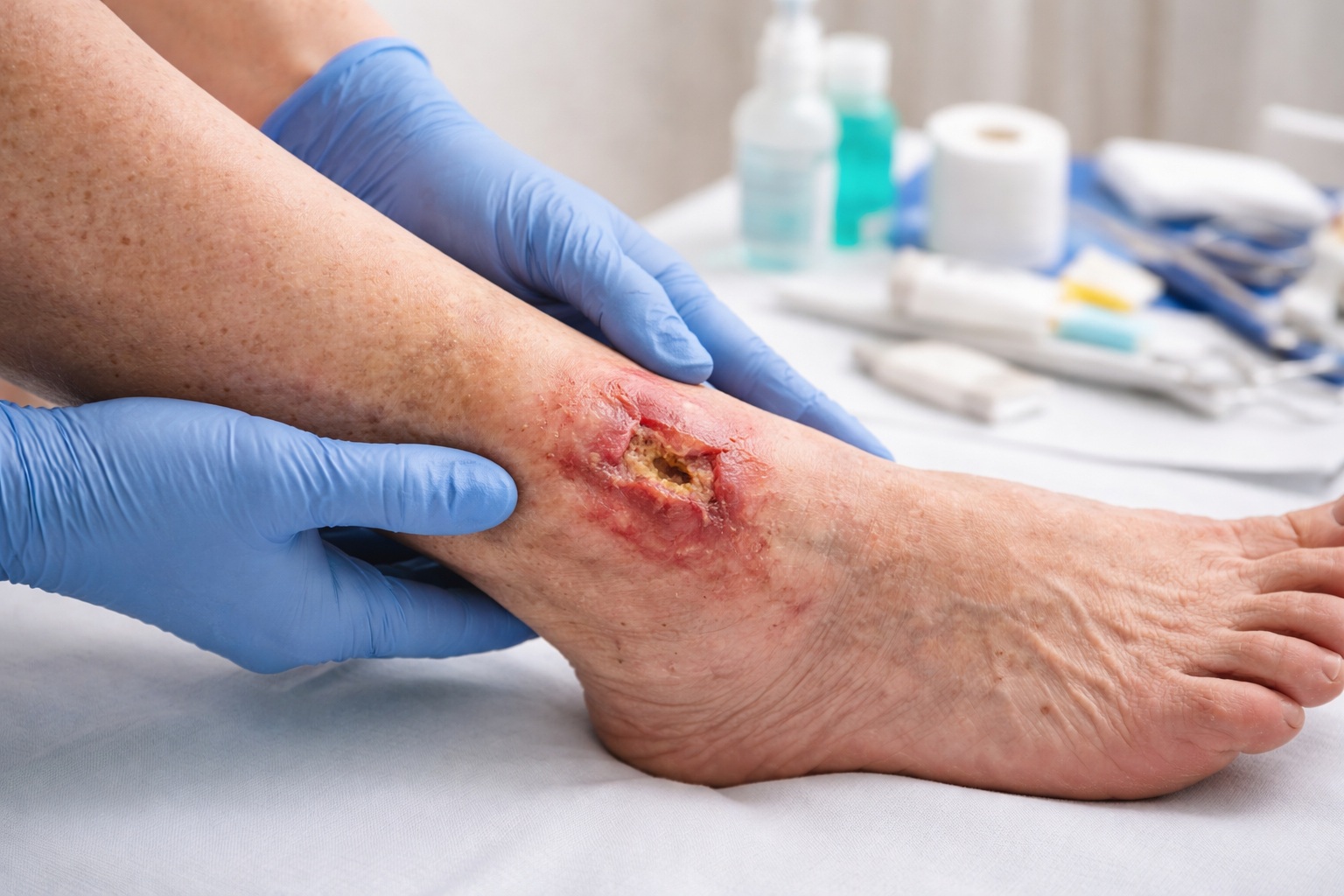
You’ve had this sore on your leg for weeks now. Maybe you thought it would heal like any other scrape. But it’s still there. You’re starting to worry because it looks the same or maybe even worse than when it first appeared.
Leg sores that won’t close aren’t just annoying. They’re telling you something is seriously wrong with how blood moves through your legs. Most people search for “sores on legs won’t heal” or “open wound not healing” because they’ve tried everything at the drugstore and nothing works. That’s because these wounds need actual medical treatment – specifically addressing the circulation problems causing them.
Treatment for non-healing leg sores typically involves compression therapy for venous issues, restoring blood flow for arterial problems, specialized wound care and managing underlying conditions like diabetes. The key is fixing what’s broken in your circulation while properly caring for the wound itself.
What’s Actually Causing Sores on Your Legs
Most leg sores happen because blood isn’t flowing right through your veins or arteries. When circulation fails your skin can’t get oxygen and nutrients. That creates wounds that just sit there refusing to heal.
Venous Insufficiency
The valves in your leg veins are supposed to push blood back up to your heart. When they quit working blood pools in your lower legs instead. That pooled blood creates pressure that damages skin and opens sores around your ankles. You’ll notice swelling and skin that looks brownish or purple.
Arterial Disease
Narrowed or blocked arteries mean your legs don’t get enough oxygen-rich blood. Without oxygen even tiny injuries won’t heal. These arterial ulcers show up on toes, heels or bony parts of your feet. The skin often looks pale and feels cold. If you’re experiencing leg pain along with poor circulation these wounds become even more likely.
Diabetes and Nerve Damage
High blood sugar damages both blood vessels and nerves. The nerve damage means you don’t feel injuries so they go unnoticed. The vessel damage means they can’t heal. Most diabetic ulcers develop on the bottom of feet where you put pressure when walking.
Signs Your Leg Sore Needs Medical Treatment Now
Not every wound is the same. Leg ulcers have specific warning signs.
Venous ulcers typically:
- Show up around ankles or lower calves
- Drain heavily or constantly weep fluid
- Have swollen discolored skin around them (brown or purple)
- Ache but feel better when you elevate your legs
Arterial ulcers usually:
- Appear on toes, heels or sides of feet
- Barely drain at all
- Look pale and feel cold
- Hurt worse when you elevate your legs
Infection warnings:
- Redness spreading from the sore
- Area feels warm or hot
- Yellow or green discharge with bad smell
- Fever or pain that’s getting worse
If your wound hasn’t improved after two weeks of home care or you see any infection signs you need a vascular specialist. These wounds don’t respond to drugstore bandages and creams.
What Happens If You Don’t Get Treatment
Waiting makes everything worse. Infections spread deep into tissue, bones or your bloodstream. A small ankle sore can become life-threatening sepsis requiring hospitalization and IV antibiotics.
Chronic wounds drain your energy and weaken your immune system. You might not be able to work or do normal activities because of constant pain and wound care demands.
With peripheral arterial disease untreated ulcers can lead to tissue death requiring amputation. This especially affects people with diabetes who have reduced sensation and don’t realize how bad things have gotten.
How Doctors Diagnose What’s Causing Your Wound
Your doctor will ask about how long you’ve had the sore, whether you have diabetes or high blood pressure, if you’ve had blood clots or varicose veins and whether you smoke.
Testing Your Circulation
Tests aren’t extra steps. They’re necessary to fix the root problem instead of just covering symptoms.
- Ankle-brachial index compares blood pressure in legs versus arms
- Venous duplex ultrasound shows how blood flows through veins
- Arterial imaging reveals blockages
- Wound cultures identify infections
If you’re experiencing other leg symptoms like swelling or discoloration your doctor might order a vascular ultrasound to get a complete picture of what’s happening with your circulation.
Treatment That Actually Heals Leg Sores
Healing requires fixing circulation problems while providing proper wound care.
For Venous Ulcers
Compression is essential. Medical-grade stockings or bandages apply pressure that pushes blood back toward your heart. Wound care specialists clean the ulcer regularly and use dressings that keep it moist while blocking infection. Elevating your legs several times daily helps even more.
For Arterial Ulcers
You have to restore blood flow first. PAD treatment might include procedures to open blocked arteries, angioplasty with stenting or bypass surgery creating new blood flow routes. These procedures help oxygen-rich blood reach your legs again so wounds can finally heal. Special shoes or padding takes pressure off foot ulcers while circulation improves.
Advanced Wound Therapies
Negative pressure therapy uses suction to draw out fluid and promote healing. Growth factors or skin substitutes speed tissue repair. Debridement removes dead tissue blocking the healing process.
If insurance coverage for vein treatment is a concern most policies cover medically necessary procedures when wounds are present.
Taking Care of Your Wound at Home
Your doctor gives you specific instructions for wound care between visits. Following them exactly makes the difference between healing in weeks versus months.
- Keep it clean by washing gently with mild soap and lukewarm water. Apply prescribed dressings exactly as shown.
- Watch for infection every single day. Check for increased redness, warmth or different drainage. Report any changes immediately.
- Wear compression stockings or wraps every day as prescribed. They’re as important as any medication. Elevate your feet above heart level for 30 minutes three to four times daily.
- Stay active within limits. Walking improves circulation but don’t overdo it. Avoid standing or sitting in one position too long.
Preventing New Sores After Healing
Once you’ve healed a leg ulcer preventing new ones becomes priority one. The same conditions will create more sores if you don’t address them.
Keep diabetes tightly managed. Take blood pressure and cholesterol medications as prescribed. Stop smoking because it damages blood vessels and impairs healing.
Protect your skin daily. Moisturize to prevent dryness and cracking. Inspect legs and feet every day for breaks or changes. Wear proper footwear that doesn’t create pressure points.
Keep wearing compression stockings if recommended. Exercise regularly with activities promoting leg circulation. Get proper varicose veins treatment to reduce your risk of future ulcers.
Getting the Right Care for Your Leg Sores
Leg ulcers need specialists who understand vascular disease and wound healing. Regular wound care without addressing circulation won’t close your sores.
A vascular specialist evaluates your circulation, identifies exactly what’s preventing healing and creates a plan addressing both issues. The sooner you get proper treatment the faster wounds heal and the lower your complication risk.
Dealing with leg sores that won’t heal? Prime Vascular Care treats the vascular problems causing chronic wounds. Call us or schedule your consultation online to start healing.