

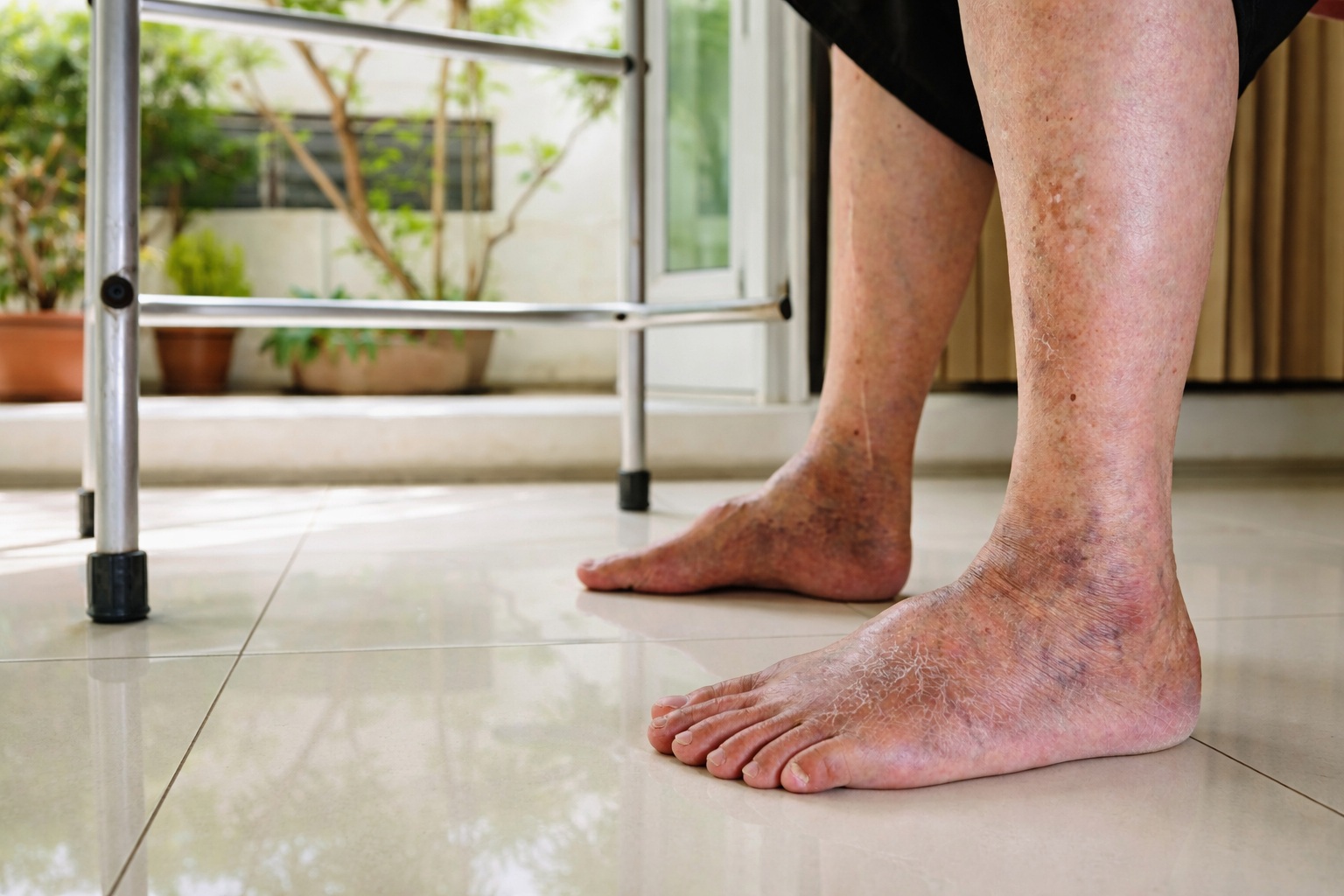
There are numerous different causes, but diabetes and difficulties with the circulatory system are two of the more prominent ones. With that stated, we specialize in such medical crises regarding their patients. In order to give the best care, both patients and clinicians need to be able to discern the difference between a minor cut, an ulcer caused by poor circulation and a diabetic foot ulcer.
This post will discuss how diabetes makes it harder for wounds to heal, how to detect if you have a diabetic foot ulcer and how to treat one the right way.
Why Diabetes Slows Down Wound Healing
It is harder for the body to heal when it has diabetes mellitus, especially Type 1 and Type 2 that aren’t well controlled. Over time, high blood sugar levels damage blood vessels and nerves, which causes:
1. Peripheral Neuropathy
When blood sugar levels are high, nerves don’t work as well. So: less feeling in the feet. Patients could not feel pain, heat or injury. People don’t notice little cuts and scrapes until they get worse.
2. Peripheral Artery Disease
It is the accumulation of plaque in the walls of arteries and diabetes accelerates it. When there isn’t enough blood flow to the lower extremities, the feet become pale and frigid. Healing takes a long time. More likely to get sick.
What a Diabetic Foot Ulcer Actually Looks Like
A diabetic foot ulcer is a cut in the skin that commonly forms on the bottom of the foot. It doesn’t heal because the nerves are damaged and the blood supply is weak.
Diabetic foot ulcers usually show up in a clinical context with:
- Shallow, crater-like lesions on the bottom of the foot or on pressure points
- Creating a callus along the edge of the wound
- Initially, there was only a little pain due to neuropathy
- The skin around the area may be hot, red or infected
Signs That Point to a Circulatory (Ischemic) Ulcer Instead
- It hurts, especially when you lie down
- The skin around the wound is thin and shiny
- Loss of hair on the feet and legs
- Cool to the touch and weak or no pulses
Circulatory ulcers are typically associated with peripheral artery disease. If that’s the underlying cause, peripheral artery disease treatment can help restore blood flow and improve healing. These lesions can be more painful than diabetic neuropathic ulcers and they don’t always happen at pressure points. However, there can be moments when you have to be aware of all the possible signs of poor circulation that are also related with another serious issue.
Ulcers often have both neuropathic and vascular features, which makes diagnosis and treatment more difficult. This is known as a neuroischemic ulcer.
How Diabetic Foot Ulcers Are Treated
Different kinds of doctors work together to treat diabetic foot ulcers. The treatment depends on how serious the wound is, how well blood is flowing and whether or not there is an infection.
1. Offloading Pressure from the Wound
A big aspect of treatment is: special shoes, all contact castings, boots for unloading.
2. Keeping Blood Sugar in Check
If you don’t keep your blood sugar in check, it will take longer to heal and you are more likely to have an infection. Changing medications and giving dietary guidance are two very significant ways to keep glucose levels under control.
3. Wound Debridement
Removing diseased or dead tissue: sharp debridement, ways that use enzymes, methods of autolysis.
4. Treating Infection
Antibiotics taken by mouth or through an IV may be needed for infected ulcers. Testing for culture and sensitivity. Being in the hospital with a bad case of cellulitis.
5. Restoring Blood Flow
If tests show that the arteries aren’t performing well enough, patients who also need PAD treatment may require angioplasty or bypass surgery to return blood flow back to normal.
6. Advanced Wound Care
Doctors may utilize the following for ulcers that won’t heal: negative pressure wound therapy, things that can replace skin, things that help things grow, hyperbaric oxygen therapy.
These advanced alternatives are commonly used by specialized wound care centers.
How to Prevent Foot Ulcers from Coming Back
If you don’t take action to stop it, an ulcer will usually come back after it has healed. Here are several important techniques to stop something from happening: check your feet every day, regular nail care and foot care from a professional, shoes and orthotics that fit nicely, giving up smoking, keeping an eye on blood sugar levels and getting frequent exams from doctors and nurses.
When You Should See a Doctor Right Away
Now, you must get a proper consultation from a doctor as soon as possible if the wound is getting a bit too reddish and heated. On top of that, if there’s out-of-bounds swelling or a terrible smell, you already know it’s an alarming sign.
Furthermore, there’d be moments when you would feel feverish or even those chills around your body that are too uneven to handle. In addition, you may witness a cutting situation in your bone area. For that reason, we’ve developed methods to promote healing on chronic infections.
Meanwhile, there could also be the case of systemic involvement that demands quick diabetic foot ulcer treatment in the long run. If there’s a serious issue regarding the matter, then they can have a wound care treatment right away for it.
A Final Note
After all, diabetics’ foot wounds are not only minor cuts; they are clinical indicators that need to be looked at properly. It’s very crucial to know the difference between a small cut, an issue with circulation and a diabetic foot ulcer. Now, if you require more information and services regarding such scenarios, you may go to Prime Vascular Care in order to find out more. After all, we are eager to aid the ones that need it.