
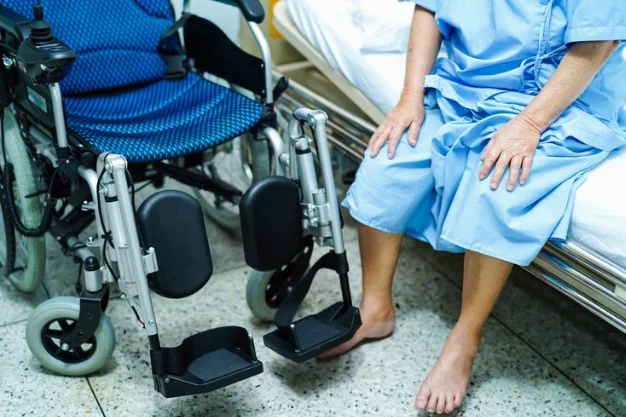
Critical limb ischemia, now termed chronic limb-threatening ischemia (CLTI) in clinical guidelines, is the most advanced stage of peripheral artery disease (PAD). It develops when narrowed or blocked arteries can no longer deliver enough blood to keep the tissues of the foot and lower leg alive, even while the body is at rest. The hallmark signs are burning pain in the foot or toes at rest, sores that fail to heal and areas of skin that darken as tissue begins to die. Because CLTI places the limb itself at risk, it is regarded as a condition that warrants prompt evaluation by a vascular specialist rather than routine follow-up.
Progression From Peripheral Artery Disease to Critical Limb Ischemia
PAD begins when plaque accumulates inside the arteries of the legs and gradually narrows the channel through which blood flows. In its earlier stages, the condition often produces claudication, a cramping discomfort in the calves or thighs that appears during walking and eases within minutes of rest. At that point, blood supply is adequate while the leg is still but falls short when the muscles demand more oxygen.
As narrowing advances or additional arteries become blocked, the margin between supply and demand disappears. Blood flow eventually becomes insufficient for the basic needs of the skin, nerves and muscles of the foot and the condition crosses into CLTI. Cleveland Clinic estimates that approximately 1 to 2 in 10 people with PAD develop this advanced stage. Patients often recognize earlier signs of blocked arteries in the legs in retrospect, although some reach CLTI without ever experiencing typical walking pain, particularly when diabetes or neuropathy has dulled sensation.
Critical Limb Ischemia Symptoms and Warning Signs
Persistent Foot and Toe Pain at Rest
Ischemic rest pain is a persistent burning or aching sensation in the forefoot, toes or heel that occurs without exertion. It characteristically worsens at night when the legs are elevated in bed, since gravity no longer assists blood flow toward the foot. Hanging the affected leg over the side of the bed or sleeping upright in a chair often brings temporary relief, a pattern that clinicians regard as a strong indicator of severe arterial insufficiency.
Nonhealing Foot Ulcers and Open Wounds
A minor cut, blister or pressure point on the foot may remain open for weeks or gradually enlarge. Arterial ulcers commonly appear on the toes, the heel or the outer edge of the foot and often have a pale, dry base with sharply defined edges. Without adequate blood supply, the body cannot deliver the oxygen and nutrients required for repair.
Skin Discoloration and Reduced Foot Temperature
The affected foot may appear pale when raised and turn dusky red when lowered. It often feels noticeably cooler than the opposite foot. The skin may also become thin and shiny, with loss of hair on the lower leg and thickened toenails.
Tissue Death and Gangrene in Advanced CLTI
In the most advanced cases, areas of the toes or foot turn black and become dry and shriveled as tissue dies. Gangrene may also become wet and infected, which represents a serious threat to both the limb and overall health.
Risk Factors for Chronic Limb-Threatening Ischemia
Several factors increase the likelihood that PAD will progress to CLTI. Diabetes is among the most significant, since it accelerates arterial disease in the smaller vessels below the knee and impairs both sensation and healing. Continued smoking after a PAD diagnosis, chronic kidney disease and advanced age also raise risk considerably. People with established coronary artery disease or prior stroke frequently have widespread atherosclerosis that affects the legs as well.
For patients with diabetes, distinguishing between a neuropathic ulcer and one caused by poor circulation can be difficult. Understanding how diabetic and circulatory foot wounds differ helps explain why vascular assessment is often part of diabetic foot care.
Choose the Best Peripheral Arterial Disease Treatment for Your Health
Explore your treatment options and get expert advice from our vascular surgeon.
Diagnostic Tests for Critical Limb Ischemia
Evaluation typically begins with a physical examination that includes checking the pulses in the feet and inspecting the skin, nails and any wounds. The ankle-brachial index compares blood pressure at the ankle with that at the arm and remains a standard first test. An abnormal ABI result is often what prompts further investigation. Because calcified arteries in people with diabetes or kidney disease can produce falsely elevated ankle readings, clinicians frequently add a toe-brachial index or pulse volume recordings for a more reliable measurement.
Imaging then maps the location and extent of the blockages. Duplex ultrasound is commonly used first, while CT angiography, MR angiography or catheter-based angiography may follow when a treatment plan requires detailed views of the arteries below the knee.
Critical Limb Ischemia Treatment and Limb Preservation
Revascularization to Restore Arterial Blood Flow
Revascularization is the central objective of CLTI care, since tissue cannot heal without an adequate blood supply. Endovascular techniques such as balloon angioplasty, stent placement and atherectomy are performed through a small puncture in the artery and are often well suited to patients with multiple medical conditions. Surgical bypass, which routes blood around a blocked segment using a vein or synthetic graft, may be recommended for long or complex blockages. The approach chosen depends on the pattern of disease, the condition of the available veins and the overall health of the patient. A vascular surgeon can explain the options available through peripheral artery disease treatment.
Wound Care and Infection Management
Once circulation improves, attention turns to the wound itself. Debridement removes dead tissue while appropriate antibiotics address any infection. Specialized dressings and offloading devices then reduce pressure on the affected area. Coordinated chronic wound care alongside revascularization gives the tissue the best opportunity to close.
Medications and Cardiovascular Risk Management
Antiplatelet medication, high-intensity statins and careful control of blood pressure and blood sugar reduce the risk of further arterial events. Stopping smoking remains one of the most effective measures available, since tobacco continues to damage the arteries and impairs healing after any procedure.
The Importance of Early Treatment in Preventing Amputation
Cleveland Clinic reports that up to 1 in 3 people with CLTI require a major amputation within a year of diagnosis. People with CLTI also face an elevated risk of heart attack and stroke, reflecting the widespread nature of the underlying arterial disease. Early referral expands the range of available options and improves the likelihood that circulation can be restored before tissue loss becomes extensive.
SEEK EMERGENCY CARE IMMEDIATELY
Call 911 or go to the nearest emergency department if a leg or foot suddenly becomes painful, pale, cold, numb or weak. Prompt emergency care is also needed when a foot wound shows spreading redness, foul-smelling drainage or blackened skin accompanied by fever. These signs may indicate acute limb ischemia or a severe infection that requires urgent treatment to protect the limb.
Final Thoughts
Foot pain at rest, wounds that remain open and color changes in the toes are signals that circulation may no longer be meeting the needs of the limb. Prime Vascular Care evaluates suspected CLTI using ankle-brachial and toe-brachial testing along with duplex ultrasound at its Sterling and Woodbridge clinics and develops treatment plans focused on restoring blood flow and preserving the limb. Patients from Alexandria, Hamilton, Warrenton and those seeking vascular care in Stafford can schedule an evaluation to understand their findings and the treatment options available.