

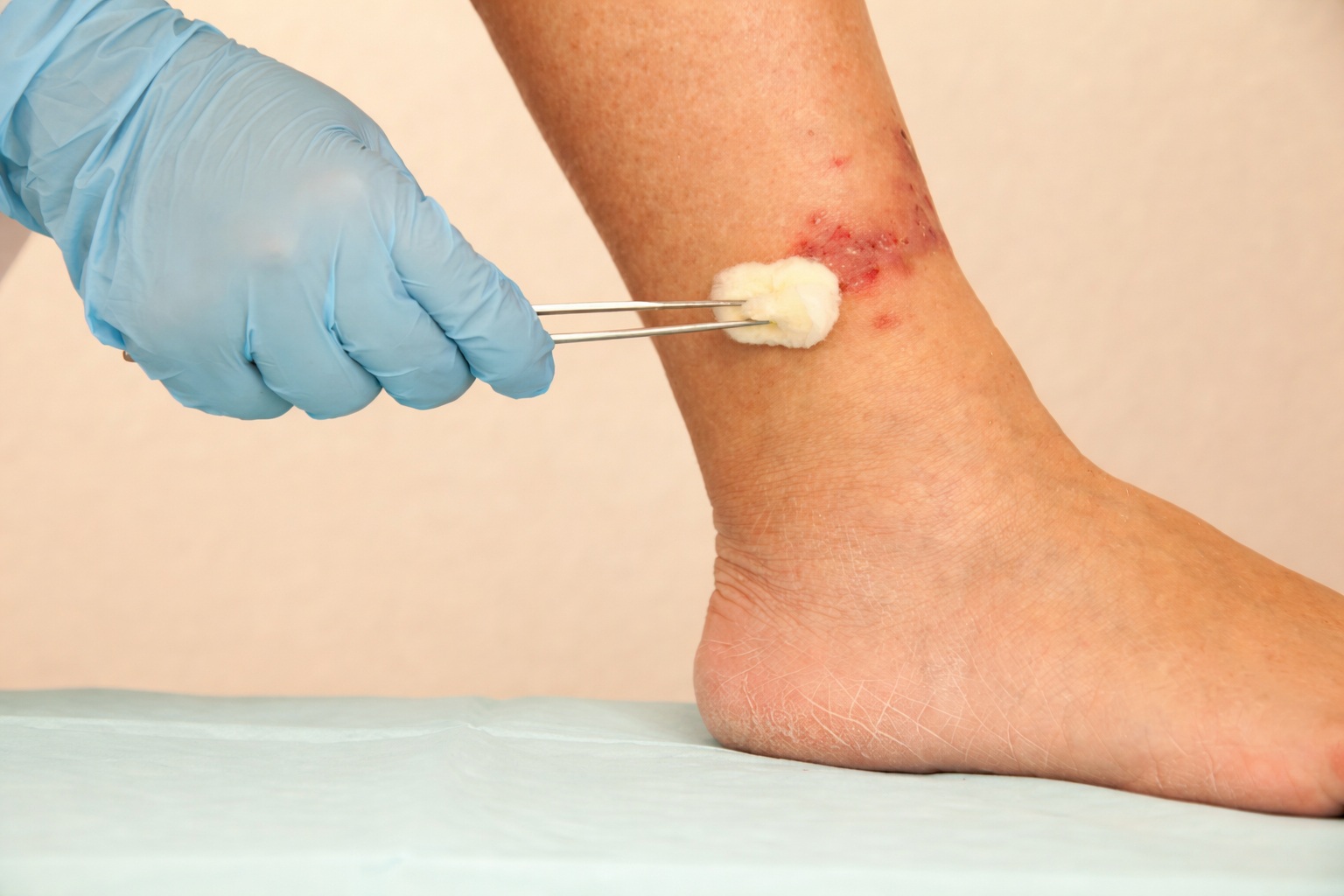
Leg ulcers that won’t heal usually come from one of two circulation problems. Arterial ulcers happen when blocked arteries can’t deliver enough blood to your leg. Venous ulcers happen when damaged veins can’t pump blood back to your heart.
These wounds look different and need different treatments. The right diagnosis determines which approach will work.
What Are Venous Leg Ulcers?
Venous ulcers are the most common type, making up about 80% of leg wounds. They form when vein valves in your leg stop working properly. Blood pools in your lower leg instead of flowing back to your heart. This creates pressure that eventually breaks down the skin.
Where Venous Ulcers Appear
These ulcers usually show up on the inside of your ankle or lower leg, between the knee and ankle. They tend to be large and shallow with irregular, uneven edges. The base looks red, often with a yellow coating. You’ll notice drainage that soaks through bandages.
Signs Around the Wound
The skin around the wound develops brown or purple discoloration from leaked blood. Swelling increases throughout the day. The skin feels thick and hardened in some areas, and may feel warm to the touch. Some people notice itching or scaling.
How Venous Ulcers Feel
The pain is typically a dull ache through the leg. Standing makes it worse. When you elevate your leg, the pain gets better. This response to elevation is one of the key differences from arterial ulcers.
What Are Arterial Leg Ulcers?
Arterial ulcers are less common and require urgent treatment. They form when narrowed or blocked arteries can’t deliver oxygen-rich blood to your legs. Without adequate blood flow, tissue dies and creates wounds that struggle to heal.
Where Arterial Ulcers Appear
These ulcers appear on feet, toes, heels, or the outer ankle. They often develop at pressure points or where bones sit close to the skin. They’re usually small and deep with round, clean edges that look punched out.
Signs Around the Wound
The wound appears pale, gray, yellow, or even black. Unlike venous ulcers, these stay dry with little to no drainage. The surrounding skin feels cool or cold to the touch and looks shiny and tight. You’ll notice hair loss on the lower leg and thick, discolored toenails.
How Arterial Ulcers Feel
The pain is severe, especially at night. Elevating your leg makes it worse, not better. Many people sleep in a chair or dangle their leg over the bed edge for relief.
Venous vs Arterial Ulcers: Side-by-Side
| Feature | Venous | Arterial |
| Location | Inner ankle, lower leg | Feet, toes, heels |
| Size | Large, shallow | Small, deep |
| Edges | Irregular | Round, defined |
| Drainage | Heavy | Minimal |
| Skin temp | Warm | Cold |
| Pain with elevation | Decreases | Increases |
The elevation test is the easiest way to tell them apart. Raise your leg. If the pain gets better, it’s likely venous. If it gets worse, it’s likely arterial.
How Treatment Differs
Treating Venous Ulcers
For venous ulcers, compression therapy is essential. Special wraps or stockings squeeze your leg to push blood back toward your heart. Elevating your leg when resting helps too. Specialized wound care manages the drainage and promotes healing. Sometimes procedures fix the damaged vein valves.
Treating Arterial Ulcers
For arterial ulcers, restoring blood flow comes first. This usually involves procedures like angioplasty or bypass surgery to open blocked arteries. Your doctor may recommend peripheral arterial disease treatment before focusing on the wound itself. The wound is kept clean and dry. Compression is avoided because it restricts blood flow.
When Both Problems Exist
About 10 to 15 percent of people have both venous and arterial disease. These mixed ulcers need careful treatment that addresses both problems. Full compression can’t be used because of the arterial component. But the venous pooling can’t be ignored either.
How Doctors Diagnose the Type
Doctors use simple tests to determine which type you have.
An ankle-brachial index test compares blood pressure in your ankle to your arm. Lower ankle pressure indicates arterial blockages. The test takes about 10 minutes.
Duplex ultrasound shows blood flow in real time. It identifies blocked arteries or faulty vein valves. These tests are painless and give clear answers about what’s causing your wound.
Signs You Need Medical Care
See a doctor if:
- Your wound hasn’t improved after 3 to 4 weeks
- You have diabetes and notice any foot wound
- Pain is getting worse instead of better
- You see red streaks extending from the wound
- You develop fever or feel unwell
- The wound is draining pus or has a foul smell
Both types need specialized care. General wound dressings won’t fix the underlying circulation problem.
Why Proper Diagnosis Matters
Venous ulcers that only get wound care without fixing the vein problem come back in 50 to 70 percent of cases. The circulation issue remains, so the wound returns.
Arterial ulcers won’t heal without restoring blood flow. The tissue continues to die, increasing infection risk.Circulation problems are one of the main reasons some wounds heal slowly or not at all.
Getting the right diagnosis means faster healing and lower chance of recurrence.
Understanding the Main Difference
Venous and arterial ulcers are opposite problems requiring opposite treatments.
Venous ulcers come from blood pooling because vein valves don’t work. They usually appear around the ankle with wet, irregular edges. They feel better when you elevate your leg.
Arterial ulcers come from blocked arteries that prevent blood flow. They usually appear on feet and toes with dry, round edges. They feel worse when you elevate your leg.
Get tested to find out which type you have, then treat the circulation problem causing it.
Next Steps
If you’re dealing with a leg wound that isn’t healing, knowing whether it’s venous or arterial makes a real difference in your treatment plan. The tests we use to diagnose these conditions are straightforward and painless.
At Prime Vascular Care, we focus on identifying the circulation problem behind your wound so we can address it properly. Our team in Sterling, Virginia works with patients throughout Northern Virginia who need help with non-healing wounds.