
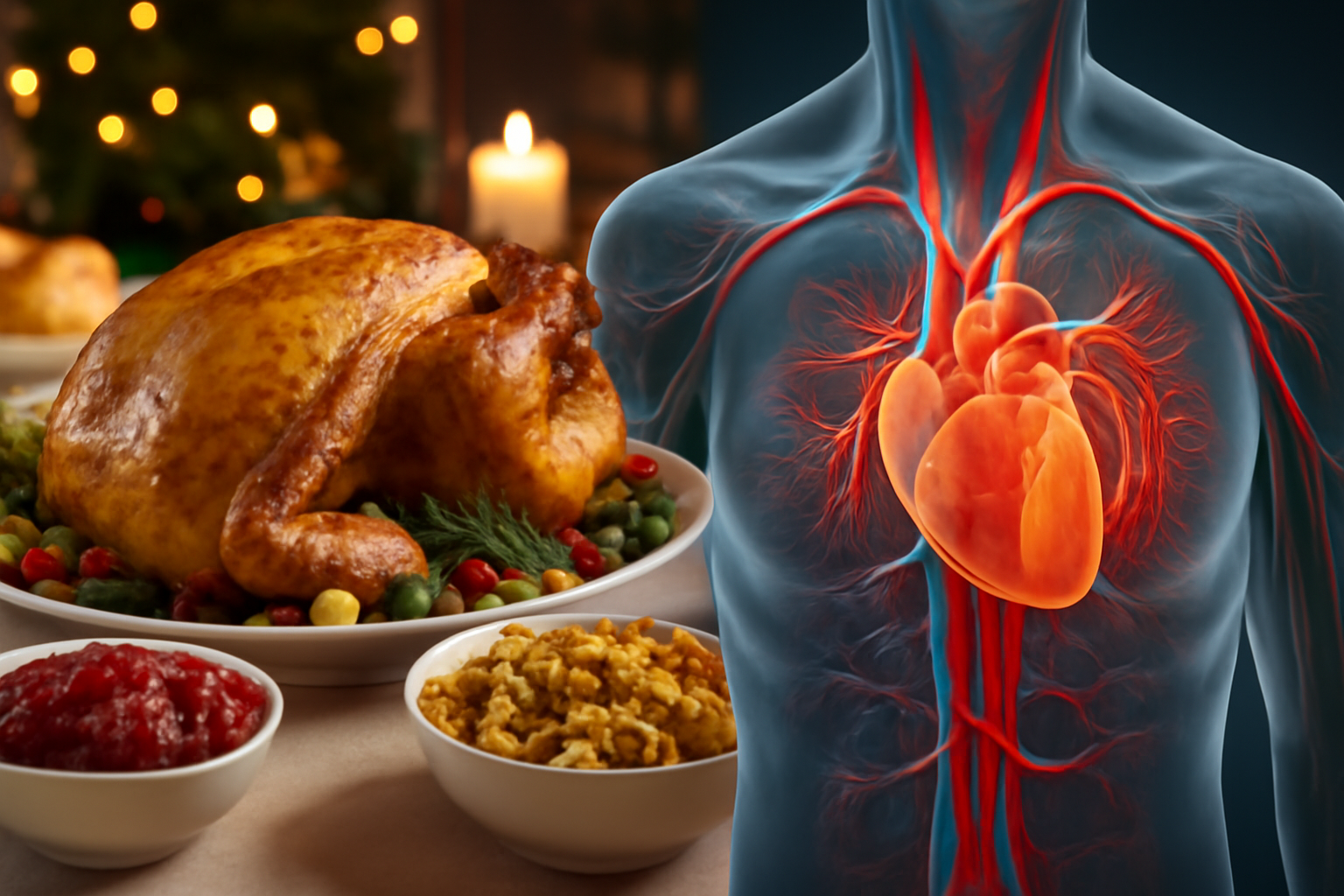
Between Thanksgiving and New Year’s, emergency rooms see a 33% jump in heart attacks. The week after Christmas is particularly dangerous for cardiovascular events. Most people blame cold weather or family stress, but your holiday plate tells the real story.
The damage doesn’t come from one big Christmas dinner. It comes from six straight weeks of rich foods, skipped workouts and constant stress hitting blood vessels that are already working overtime.
Why Six Weeks of Holiday Eating Matters
Inflammation Doesn’t Take a Break
One indulgent meal causes temporary inflammation that your body handles fine. But eating rich foods repeatedly triggers chronic low-grade inflammation. Your artery walls stay swollen for weeks instead of hours.
This ongoing inflammation makes cholesterol stick more easily to artery walls. The result?
- Plaque builds faster
- Blood flow decreases
- Energy levels drop
- Cognitive function suffers
People with narrowed arteries notice the effects first. Walking gets harder. Thinking feels foggy. Balance becomes shakier. If you’re over 60 or have risk factors like diabetes or high blood pressure, getting screened early can catch problems before they become serious.
Blood Vessels Lose Their Stretch
Healthy arteries flex with each heartbeat like a fresh rubber band. High-fat holiday meals make arteries stiff for 4-6 hours after eating. Think of an old dried-out rubber band that won’t snap back.
One episode won’t hurt you. But stiff arteries for several hours every single day damage the lining permanently. Small tears develop. Scar tissue forms. The arteries never regain their original flexibility.
Salt Creates Constant Pressure
Most holiday meals pack 3,000-4,000mg of sodium nearly double the daily limit of 2,300mg. Excess sodium pulls water into blood vessels, creating pressure that constantly pushes against artery walls.
Imagine doubling the water pressure in a garden hose for six weeks straight. The hose develops weak spots. Your arteries work the same way.
Understanding Holiday Heart Syndrome
Holiday heart syndrome refers to atrial fibrillation associated with binge drinking. Your heart starts racing or skipping beats when alcohol disrupts its electrical signals.
Binge drinking means:
- 4+ drinks in 2 hours for women
- 5+ drinks in 2 hours for men
Holiday parties make this easy. A cocktail while cooking. Wine with dinner. Champagne for toasts. After-dinner drinks. Suddenly, you’ve had six drinks without realizing it.
The irregular rhythm causes blood to pool in the heart chambers. Pooled blood forms clots. Those clots can travel to your brain and cause a stroke.
Foods That Protect Your Blood Vessels
Fatty Fish Calms Inflammation
Salmon, sardines and mackerel contain omega-3 fatty acids that actively turn off inflammatory signals in artery walls. Studies show that eating fatty fish twice weekly decreases arterial stiffness by 18% within three months
Make salmon your holiday centerpiece instead of ham. The omega-3s work immediately to calm stressed blood vessels.
Colorful Vegetables Clear Arteries
Brussels sprouts, broccoli and cabbage contain compounds that help clear cholesterol from artery walls. They also help your liver process fats more efficiently.
Try these holiday-friendly options:
- Brussels sprouts roasted with balsamic vinegar until crispy
- Red cabbage braised with apples and cinnamon
- Cauliflower mashed with olive oil instead of butter-loaded potatoes
Nuts Stop Mindless Snacking
Keep a visible bowl of raw walnuts, almonds, or pistachios on your counter. When you walk through the kitchen looking for something to eat, grab a handful. The protein and healthy fat satisfy hunger immediately.
Research shows eating 14 walnut halves daily (about ¼ cup) improves artery flexibility within two weeks.
Choose Olive Oil Over Butter
Olive oil contains compounds that actively repair damaged artery walls. These substances reduce inflammation and help blood vessels stay relaxed and open.
Every tablespoon of olive oil instead of butter protects your circulation. Use it for cooking, brushing on turkey, or mixing into side dishes.
Foods Actively Damaging Your Arteries
Processed Meats Trigger Inflammation
Glazed ham, sausage stuffing and bacon-wrapped appetizers contain sodium nitrites preservatives that cause arterial inflammation lasting 24-48 hours. Eating processed meat multiple times weekly for six weeks keeps your arteries constantly inflamed.
Cream-Based Everything
Holiday meals drown vegetables in cream sauce. One cup of heavy cream contains 88g of fat, mostly saturated. Your liver can’t process that much fat at once. The excess coats artery walls and triggers plaque formation.
The Cookie Problem
Grabbing one cookie every time you pass the kitchen adds up fast. Five cookies throughout the day means 40-60g of added sugar beyond what’s in your meals. This constant sugar exposure keeps insulin elevated and increases inflammation hroughout your body.
Managing Holiday Stress on Your Arteries
Stress hormones physically narrow your arteries. This happens whether the stress comes from traffic, family arguments, or rushed shopping. People with existing artery narrowing feel this most especially in the carotid arteries that supply blood to your brain.
Simple stress-busting moves:
- Walk for 10 minutes after meals (burns stress hormones before they damage arteries)
- Take the stairs while shopping instead of the elevators
- Park farther away for extra steps
- Do 5 deep breaths before entering stressful situations
A 15-minute post-dinner walk lowers blood sugar by 20-30%. That’s better than most medications.
Choose the Best Carotid Artery Treatment for Your Health
Explore your treatment options and get expert advice from our vascular surgeon.
Start Recovery Immediately
Don’t wait until January. Begin making better choices the day after a big meal.
Your 48-hour reset plan:
- Drink extra water (aim for 10 glasses)
- Eat vegetables at every meal
- Take a 20-minute walk
- Skip alcohol completely
- Get 8 hours of sleep
Temporary inflammation from one meal resolves within 48 hours when you support your body properly. After a week of healthy eating, blood pressure normalizes. Inflammation drops. Your arteries start functioning normally again.
When to Get Your Arteries Checked
Holiday eating affects your blood vessels more than most people realize. Six weeks of rich foods, extra salt and increased stress create cumulative damage that takes months to reverse.
Consider vascular screening if you:
- Are over 60 with cardiovascular risk factors
- Have diabetes, high blood pressure, or high cholesterol
- Smoke or have a family history of heart disease
- Feel more fatigued, dizzy, or off-balance than usual
A simple ultrasound shows how your arteries handled the season. Early detection means easier interventions. For those dealing with narrowed neck arteries, understanding your treatment options like carotid Endarterectomy vs Stenting can help you make informed decisions about protecting your brain’s blood supply.
Take Action for Your Vascular Health
Ready to protect your circulation this holiday season? Talk with a vascular specialist about personalized strategies for keeping your arteries healthy during celebrations and beyond.
Don’t wait for symptoms to appear. Most artery disease progresses silently until it causes serious problems. A quick screening now can save you from a stroke or heart attack later.
Schedule your post-holiday vascular check-up today. Your arteries will thank you.