

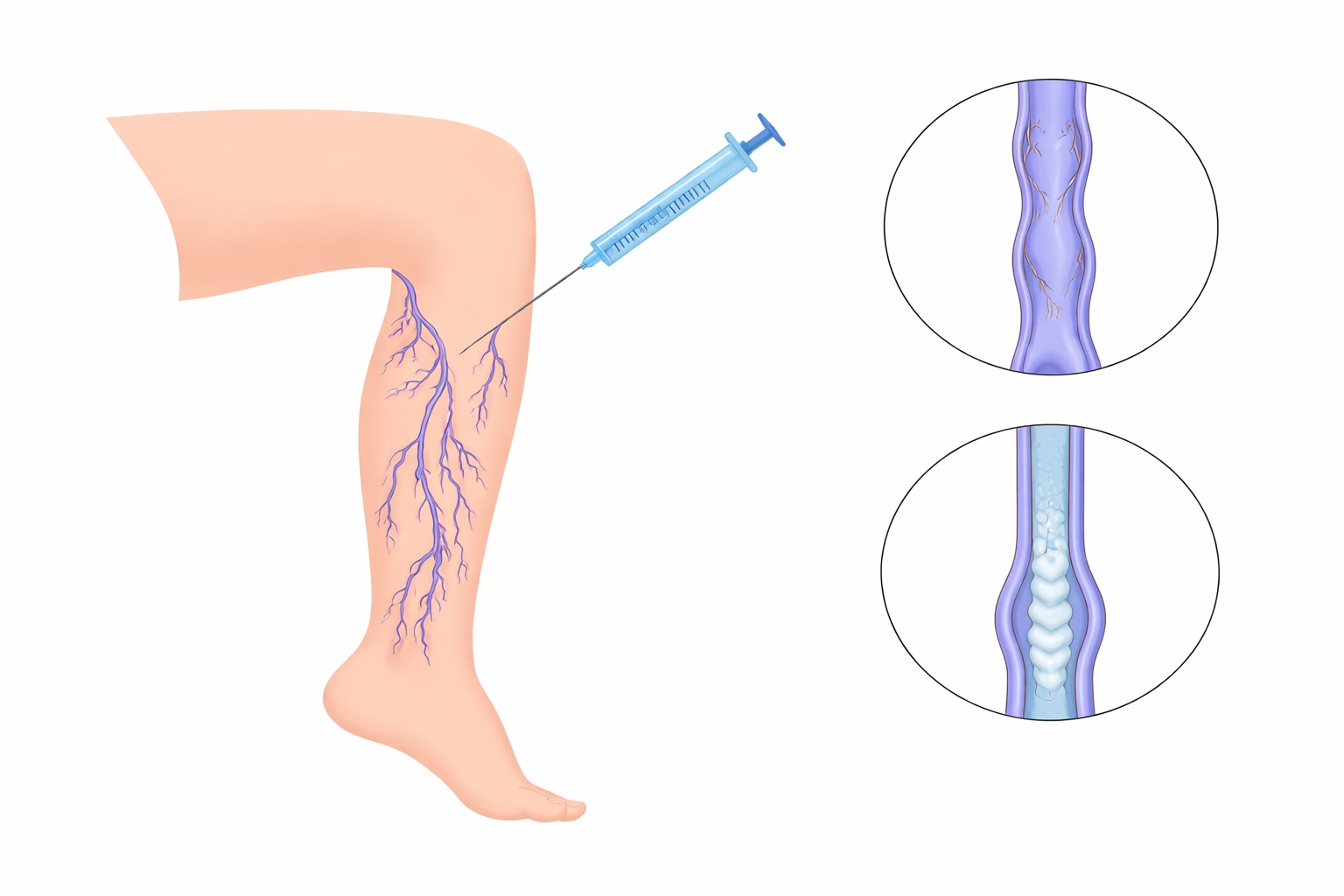
You’ve started looking into varicose vein treatment options and sclerotherapy keeps coming up. Your legs ache by the end of the day, feel heavy, or you’ve noticed the skin near your ankle starting to change color. Before your consultation, here is what you need to know about how sclerotherapy works, who it is right for and what the process actually looks like.
What Sclerotherapy Does to Your Veins
Sclerotherapy for varicose veins works by injecting a solution directly into the problem vein. That solution irritates the inner wall, causing the vein to swell shut and seal closed. Your body then gradually breaks it down and absorbs it over the following weeks.
Blood does not go missing. It reroutes through healthier veins nearby. That is how your legs end up looking and feeling better.
The procedure is done in-office. No general anesthesia. No hospital stay. Most sessions take 30 to 45 minutes and you walk out the same day.
Liquid vs. Foam Sclerotherapy: Which One Is Used?
Not every varicose vein is treated the same way. The type of injection depends on the size and depth of the vein being treated.
Liquid sclerotherapy works well for smaller, surface-level varicose veins. Foam sclerotherapy treatment for varicose veins is used for larger ones. The solution is mixed with a gas to create a foam that spreads more thoroughly through the vein, stays in contact with the wall longer and displaces blood more effectively than liquid alone.
Your vascular surgeon will decide which form is appropriate based on your ultrasound findings.
Why Ultrasound Guidance Matters for Deeper Veins
That ultrasound step is not routine paperwork. Some varicose veins sit deep beneath the skin where you cannot see them, yet they are often the ones driving your symptoms.
Ultrasound guided foam sclerotherapy for varicose veins uses real-time imaging to locate these veins before the needle is placed. The surgeon watches on screen exactly where the vein is, guides the injection to the precise location and confirms the foam has entered the correct vessel. This is also why a vascular ultrasound is ordered before treatment, not after.
Who Is a Candidate for Sclerotherapy?
Knowing how the procedure works is one part. Knowing whether you are the right candidate is another.
Sclerotherapy works best when matched to the right patient and the right vein.
Good candidates typically include:
- People with small to medium-sized varicose veins causing aching, heaviness, or swelling
- Patients with residual veins remaining after a procedure like EVLT
- Those looking for a non-surgical, office-based option with minimal downtime
Sclerotherapy alone may not be enough if:
- You have large varicose veins with significant backward blood flow in the main trunk
- Duplex ultrasound confirms active valve failure in a deeper vein
In those cases, a larger procedure like EVLT comes first, with sclerotherapy addressing the smaller branches afterward. Some patients compare laser vs sclerotherapy before deciding which route makes sense for their veins. Left untreated, chronic venous insufficiency can also progress to skin breakdown that needs wound care treatment.
Does Sclerotherapy Work for Varicose Veins?
Once you know you are a candidate, the next reasonable question is whether it actually delivers results.
When the right treatment is matched to the right patient, yes. It has a well-documented track record of closing veins, reducing visible bulging and relieving the aching and heaviness most patients describe. For large, deeply refluxing veins it is rarely effective as a standalone option, but as part of a planned approach it consistently performs well.
Most patients need more than one session. The number depends on how many veins are being treated and their size. Your surgeon will give you a realistic picture from the start.
After Sclerotherapy for Varicose Veins: What Recovery Looks Like
Understanding what to expect after the procedure helps you plan and avoid anything that could interfere with results.
Right After the Procedure
You will wear compression stockings immediately after leaving the office. These keep steady pressure on the treated veins while your body begins absorbing them. Walking is encouraged from day one.
The First Two Weeks
- Avoid high-impact exercise, heavy lifting and prolonged heat exposure including saunas and hot baths
- Do not stand or sit still for long periods. Keep moving throughout the day.
What Is Normal to See
Bruising, mild swelling and some discoloration around the injection sites are expected and typically fade within a few weeks.
You may feel small firm lumps along the treated vein. This is trapped blood inside the collapsed vessel. It is not dangerous and usually resolves on its own. If it causes discomfort, your doctor can drain it at a follow-up visit.
Smaller veins may clear within four to six weeks. Larger vessels can take three months or more.
When to Contact Your Doctor After Treatment
Most side effects are mild and manageable, but there are a few things that need prompt attention. Reach out to your care team if you notice:
- Significant swelling in the entire leg, not just near the injection site
- A red, warm streak running along the vein
- Skin blistering or an open sore near the treated area
- Chest tightness or sudden shortness of breath
These symptoms can occasionally point toward a clot, which may need DVT treatment. Knowing the DVT signs and symptoms to watch for helps you act quickly if something does not feel right.
How Many Sessions Will You Need?
Side effects aside, one of the most practical questions patients have is how long the full process takes.
Most patients require two to five sessions depending on the number and size of veins. Your surgeon will reassess after each one and adjust the plan as your veins respond. New veins can also develop over time, so some patients return for maintenance sessions in later years. Most medically necessary cases are covered, though what insurance covers for vein treatment depends on your documented symptoms and plan.
Starting With the Right Diagnosis
Before any injection is placed, a duplex ultrasound maps what is actually happening in your veins. It shows where blood is flowing backward, which veins are feeding the problem and how deep they sit. Without that picture, treatment can address the wrong vein entirely.
At Prime Vascular Care in Sterling, Virginia, every evaluation starts there. Whether sclerotherapy, foam sclerotherapy, ultrasound guided treatment, or a combination approach fits your situation, the plan is built around your circulation first.
If your legs ache, swell, or feel different than they used to, that is worth looking into.