

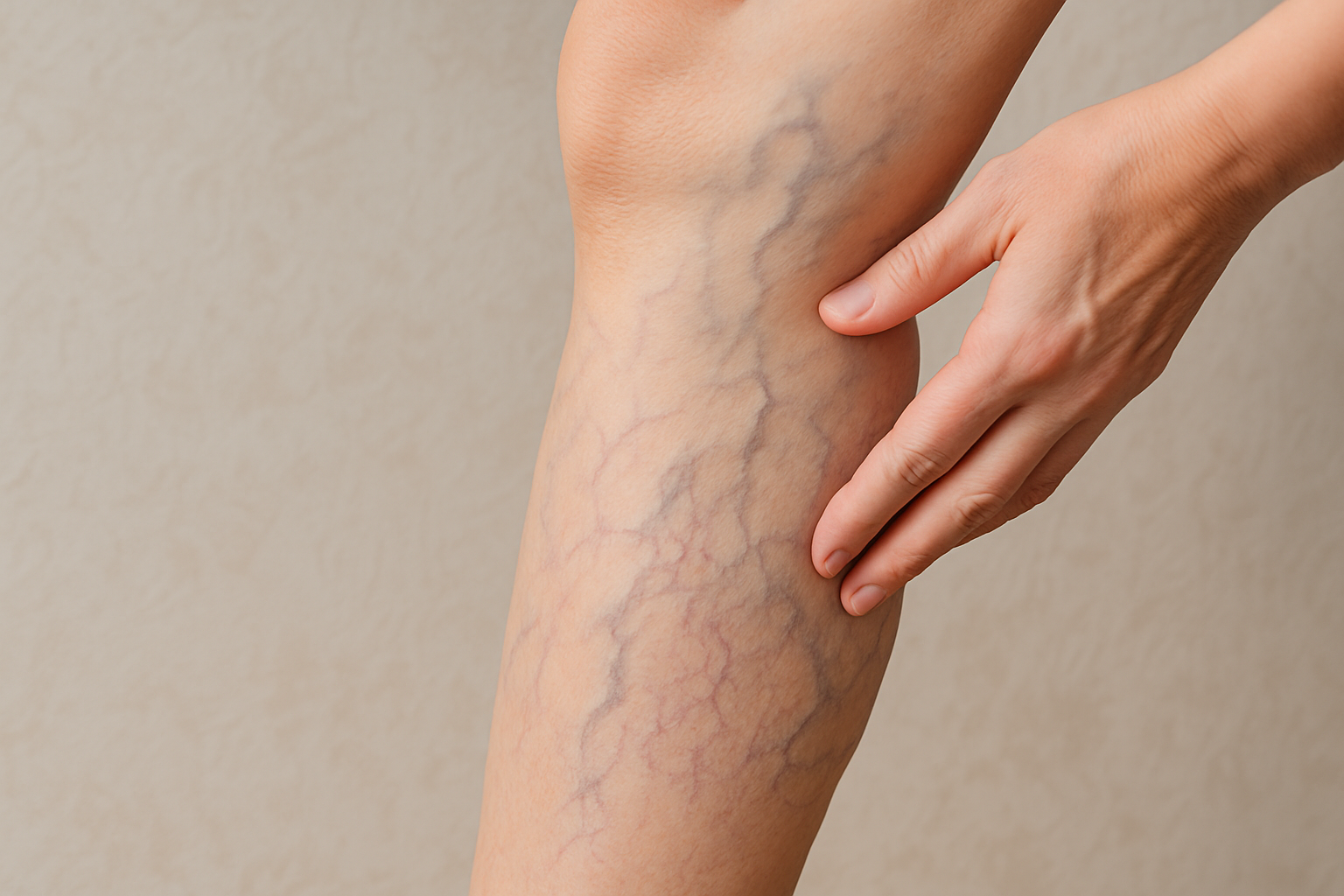
Those twisted blue veins climbing up your legs might bother you every time you look in the mirror, but should they actually worry you?
While spider veins are mostly cosmetic, varicose veins tell a different story. Roughly 23% of American adults live with varicose veins, according to the Framingham Study, yet many write them off as just another part of getting older. That assumption can lead to complications that early attention could have prevented.
Modern varicose vein treatments like sclerotherapy, laser ablation and other procedures now work really well without the long recovery times you’d get with old-school surgery.
Spider Veins vs. Varicose Veins
Spider veins show up as thin, web-like patterns. Those red, blue, or purple lines sit close to your skin’s surface. They’re basically the cosmetic cousin in the vein family. More than half of women get them, but they rarely cause actual physical problems.
Varicose veins are a whole different ballgame. These enlarged, rope-like veins bulge beneath your skin, usually looking blue or dark purple. They happen when the valves in your veins fail, so blood pools instead of flowing back toward your heart like it should. That pooling creates pressure, which makes the veins swell up and become visible.
Who Gets Them?
Some people are way more likely to develop varicose veins:
Age matters. After 50, vein valve function naturally starts to weaken.
Family history plays a big role. If both your parents had varicose veins, your risk jumps to nearly 90%.
Women get them more often because of hormonal influences.
Pregnancy increases risk since blood volume goes up and puts extra pressure on veins.
Jobs that keep you on your feet mean healthcare workers, hairdressers and retail staff face higher rates.
Extra weight means extra pressure on your leg veins.
Previous blood clots can damage vein valves permanently.
Choose the Best Varicose Vein Treatment Option for Your Health
Explore your treatment options and get expert advice from our vascular surgeon.
When Should You Actually Worry?
Most varicose veins aren’t dangerous, but severe cases can get complicated.
Blood Clots
This is the main health concern. When blood sits in varicose veins, it can clot.
Superficial thrombophlebitis happens when clots form near the skin’s surface. You’ll get swelling and tenderness, but it usually stays localized.
Deep vein thrombosis is more serious. Research shows people with varicose veins have a 5.3-fold increased risk of DVT compared to people without them. If a clot breaks off and heads to your lungs, it becomes a pulmonary embolism and you need immediate medical care. Understanding DVT risks helps you recognize warning signs early.
Skin Problems Over Time
Long-term pressure from veins that aren’t working right can damage tissue. You might see brown pigmentation around your ankles, dry or inflamed skin, hardening of the skin and tissue underneath, or venous ulcers (open wounds that take forever to heal).
These problems affect fewer than 5% of people with varicose veins, but that percentage goes up if you leave them untreated for years.
Bleeding
Varicose veins close to your skin can sometimes burst from a minor bump. It’s rarely dangerous, but the bleeding needs pressure and occasionally medical attention to stop it.
Treatment Options Today
The whole treatment landscape has changed. Old vein stripping surgery has mostly been replaced by procedures that work better with way less downtime.
Compression Therapy
Medical-grade compression stockings create graduated pressure that helps veins push blood upward. They manage symptoms and slow progression but won’t eliminate existing varicose veins.
Lifestyle Modifications
Regular movement, leg elevation, weight management and avoiding prolonged standing all support better circulation. Simple lifestyle changes work best when combined with medical treatment for symptomatic veins.
Minimally Invasive Procedures
Modern procedures let you walk in and out the same day. Doctors can inject solutions to collapse problem veins, use controlled heat to seal veins from inside (with success rates over 95%), apply medical-grade adhesive, or remove bulging veins through tiny punctures. Most of these only need local anesthesia.
When to See a Doctor
Not everyone with visible veins needs treatment, but pay attention to these:
- Aching, throbbing, or cramping that gets worse as the day goes on
- Your legs feel heavy or tired
- Swelling in your ankles or lower legs
- Itching or burning around the veins
- Skin discolouration near your ankles
- Sores that won’t heal
- Bleeding from a vein
- Hardening or thickening of your lower leg skin
Even without symptoms, getting checked establishes your baseline. Catching things early usually means simpler treatment with better results.
What Happens If You Ignore Them?
Varicose veins don’t get better on their own. Without treatment, symptomatic ones typically cause more discomfort over time. The visible veins become more obvious. Your risk of complications goes up, especially for skin changes and ulcers in advanced cases.
Getting treatment addresses what’s bothering you now while helping prevent future problems. That’s why doctors often suggest dealing with symptomatic veins sooner instead of waiting.
Taking Care of Your Veins
You can’t change your genetics or fix valve damage, but certain habits make a difference. Walking, swimming and cycling activate your calf muscles to pump blood upward. Don’t sit or stand in one spot for hours. Keep a healthy weight. Prop your legs above heart level for 15 minutes a few times daily. Wear compression garments during long flights or when you’re standing a lot.
These won’t make varicose veins disappear, but they can slow progression and reduce symptoms. Prevention strategies complement medical treatment effectively.
Taking the Next Step
If you’re dealing with leg discomfort, noticing your varicose veins getting worse, or seeing skin changes around your ankles, talking to a specialist gives you clarity. Modern vein treatment isn’t about being laid up for weeks. It’s about targeted help with minimal disruption to your life.