

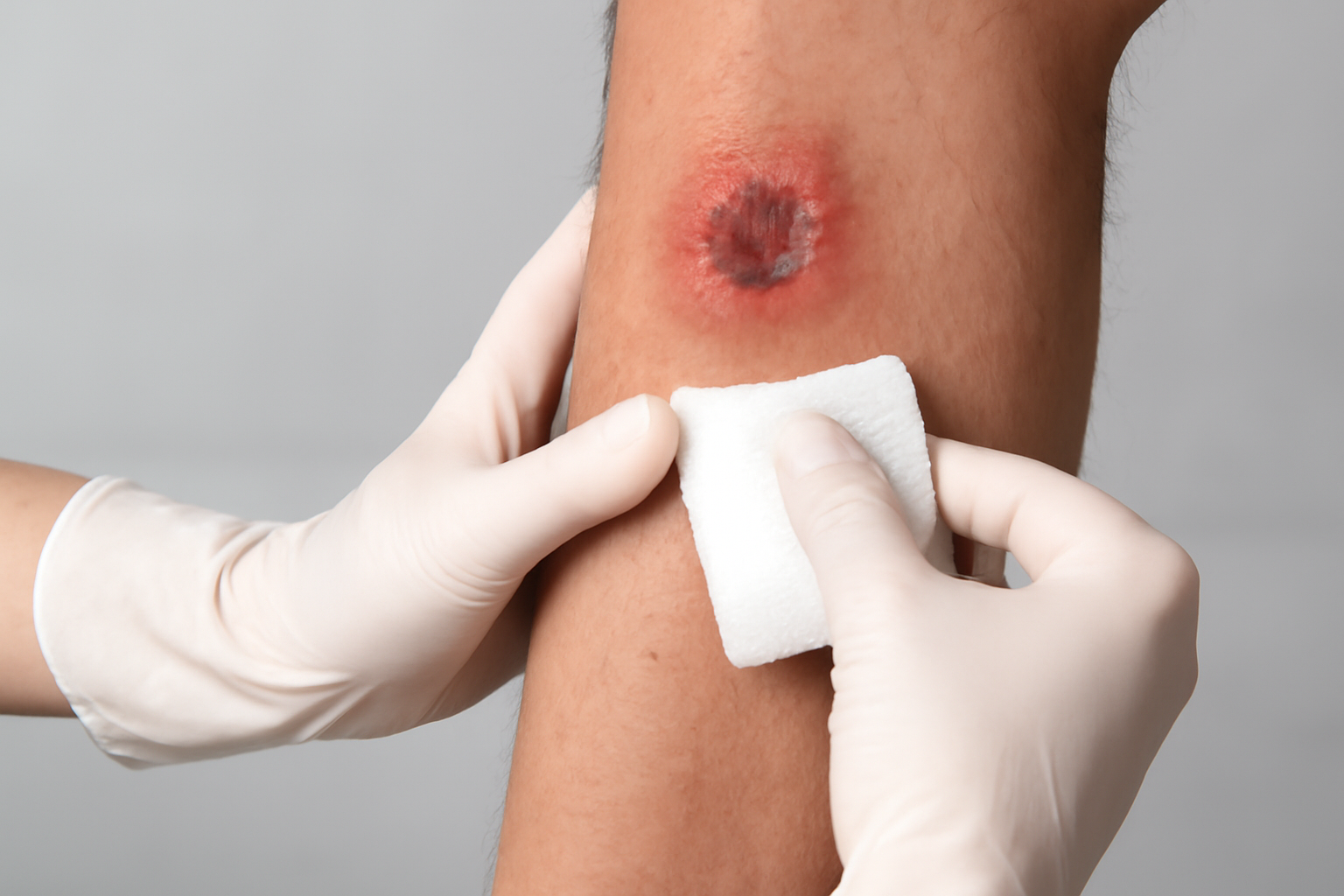
A cut on your finger heals in a week. A scraped knee might take two. But what happens when a wound on your leg refuses to close after a month? That’s when you need to start asking different questions.
Non-healing wounds aren’t just annoying. They’re your body sending up a red flag that something deeper is wrong. And the longer you wait to get help, the higher your risk of infection, tissue damage, or even amputation. Professional wound care treatment can identify the root cause and get you on the path to healing.
What Makes a Wound “Non-Healing”
Understanding the Healing Timeline
Most wounds follow a predictable path. Your body stops the bleeding, fights off infection, builds new tissue and closes everything up. The whole process usually wraps up in three to four weeks.
When a wound stalls out past that timeline, doctors call it chronic or non-healing. These wounds get stuck in one phase of healing and can’t move forward. You might see some improvement at first, then nothing. Or the wound might actually get larger instead of smaller.
Most Common Types of Non-Healing Wounds
The most common non-healing wounds show up on the legs and feet:
Arterial ulcers develop when narrowed arteries can’t deliver enough blood to your lower legs. These wounds typically appear on your toes, heels, or outer ankles. They look pale or grayish with defined edges and hurt more when you elevate your legs.
Venous ulcers form when damaged leg veins can’t push blood back up to your heart. The pooling blood creates wounds around your inner ankles. These ulcers are usually shallow with irregular edges and may drain fluid.
The Real Culprits Behind Wounds That Won’t Heal
Poor Circulation Is Usually to Blame
Your wound isn’t healing for a reason. Usually, it’s because poor circulation is starving your tissue of the oxygen and nutrients it needs to repair itself.
Peripheral artery disease tops the list of causes. PAD happens when plaque builds up in your leg arteries and blocks blood flow. Without adequate circulation, your body simply can’t complete the healing process. The wound sits there, vulnerable to infection and getting worse.
Chronic venous insufficiency creates the opposite problem. Your leg veins fail to move blood back toward your heart. The blood backs up, causing swelling and eventually breaking down your skin into ulcers.
How Diabetes Complicates Everything
Diabetes accelerates everything in the wrong direction. High blood sugar damages both your blood vessels and nerves. You end up with poor circulation plus reduced feeling in your feet. That combination means you might not notice a small cut until it’s turned into a serious wound.
Other Contributing Factors
Other factors slow healing too. Smoking constricts your blood vessels. Obesity puts extra pressure on your legs. Infections hijack your body’s repair mechanisms. Even sitting or lying in one position too long can create pressure ulcers.
When to See a Vascular Specialist
The Three-Week Rule
Here’s a simple rule: if your wound hasn’t shown real improvement after three weeks, you need specialist care. Don’t wait longer, hoping it’ll eventually heal on its own.
Warning Signs That Need Immediate Attention
You should get evaluated even sooner if you notice:
- Pain that’s getting worse instead of better
- Redness spreading out from the wound
- Increased swelling in your leg or foot
- Yellow, green, or foul-smelling drainage
- Red streaks moving up your leg (a sign of blood clots or infection)
- Fever or feeling unwell
These signs point to infection or worsening circulation. Both require immediate attention. Your primary care doctor can handle simple wounds, but wounds tied to vascular problems need someone who specializes in blood flow issues.
Choose the Best Chronic Wound Care Treatment for Your Health
Explore your treatment options and get expert advice from our vascular surgeon.
What Vascular Specialists Bring to the Table
Vascular specialists have the training and tools to figure out exactly why your wound won’t heal. They can measure blood flow, check for blockages and determine if your arteries or veins are causing the problem.
How Vascular Specialists Diagnose the Problem
Initial Evaluation
Your first visit starts with questions about your medical history and a physical exam. The specialist checks pulses in your legs, looks at skin color and temperature and examines the wound itself.
Blood Flow Testing
Then comes testing to measure blood flow. An ankle-brachial index compares blood pressure in your ankle to blood pressure in your arm. Lower pressure in your ankle means restricted blood flow.
Ultrasound imaging lets the specialist see inside your blood vessels. This test shows where arteries are narrowed or where veins aren’t working properly. It’s painless and gives clear answers about what’s blocking normal circulation.
Advanced Imaging When Needed
For complex cases, you might need more advanced imaging like CT or MR angiography. These scans create detailed pictures of your entire vascular system and help plan the best treatment approach.
Treatment Options That Actually Work
Fixing the Root Cause First
Treating a non-healing wound means fixing the underlying circulation problem. Just changing bandages won’t cut it.
For wounds caused by blocked arteries, restoring blood flow is the priority. Peripheral arterial disease treatment often starts with lifestyle modifications and medications. Simple changes can leave big impact in your recovery journey, like exercise improves blood circulation. But many patients need procedures to physically open up narrowed arteries.
Procedures for Arterial Problems
Angioplasty uses a tiny balloon to widen blocked arteries. We insert a catheter through a small puncture in your groin, thread it to the blockage and inflate the balloon. Many times we also place a stent to keep the artery open.
For more severe blockages, bypass surgery creates a detour around the problem area using a healthy vein from elsewhere in your body. This procedure gives blood a new path to reach your lower leg.
Treatment for Venous Wounds
Venous wounds need a different approach:
Compression therapy is the foundation. Special wraps or compression stockings squeeze your leg to push blood back up toward your heart. This reduces swelling and helps wounds heal.
We might also need to fix faulty valves in your veins. Procedures like venous ablation close off damaged veins so blood reroutes through healthier vessels.
Advanced Wound Care Techniques
Advanced wound care techniques speed healing once circulation improves:
- Specialized dressings keep wounds at optimal moisture levels
- Debridement removes dead tissue that prevents healing
- Negative pressure therapy uses gentle suction to pull wound edges together
- Infection control with appropriate antibiotics when needed
The key is addressing both the wound and its root cause. You can’t have one without the other.
Why Early Treatment Matters
The Risks of Waiting
Waiting to get help doesn’t just mean living with an open wound longer. It increases your chances of serious complications.
Infections in non-healing wounds can spread quickly. What starts as a surface problem can reach deep into tissue, bone, or your bloodstream. These infections are harder to treat and may require hospitalization.
Long-Term Consequences
The longer a wound stays open, the more tissue damage occurs. Chronic wounds can lead to permanent changes in your skin, muscle loss, or joint problems.
And here’s the hardest truth: delayed treatment raises your amputation risk. When circulation problems go unfixed and wounds keep deteriorating, amputation sometimes becomes the only option left.
The Difference Early Intervention Makes
Getting specialist care early changes these odds dramatically. Studies show that wound healing takes so long to heal than expected improves significantly when vascular specialists intervene within the first few weeks.
What to Expect During Treatment
Treatment Timelines
Treatment timelines vary based on wound severity and your overall health. Some patients see dramatic improvement in weeks. Others need several months of consistent care.
Your specialist will create a treatment plan tailored to your situation. This usually includes regular wound checks, circulation monitoring and adjustments as healing progresses.
Recovery Process
Most treatments happen on an outpatient basis. Procedures like angioplasty typically involve overnight observation. More complex surgeries might require a short hospital stay.
Recovery depends on which procedures you need and how well you follow care instructions. Keeping weight off the affected area, maintaining good nutrition and managing diabetes or other chronic conditions all speed healing.
Ongoing Monitoring
You’ll need follow-up appointments to track progress. These visits let your specialist spot any problems early and make sure your circulation stays adequate for complete healing.
Get Expert Care at Prime Vascular Care
Don’t let a non-healing wound control your life. At Prime Vascular Care, our board-certified vascular surgeons specialize in treating the circulation problems that prevent wounds from healing. We offer advanced diagnostic testing and minimally invasive procedures under one roof.
Call us to schedule your consultation. We accept all major insurance, including Medicare and Medicaid.